Ranking 4 Canned Fruits for Kosher and BRCGS Buyers: 2026 Shortlist
If you buy canned fruit for a kosher programme and your retail or private-label customer also asks for a BRCGS-certified supply chain, you are not really shopping for a product. You are shopping for a certificate scope that matches the exact fruit, the exact can format and the exact destination market you intend to sell into.
For that buying situation, the 2026 shortlist is short and specific: canned yellow peach, canned mandarin oranges, canned pear and canned fruit cocktail. All four sit inside the canned fruit range supplied by Agrogentra & CO., LTD. XIAMEN — a Chinese canned food exporter established in 2000 and based in Xiamen, Fujian Province — and all four can be sourced against one compliance package: STAR-K kosher certificate RIB1RR1Q (Pareve, Dairy-Free, Meat-Free, serving Israel, USA, Europe and Middle East markets), BRCGS certificate 05LA1209004 issued under Issue 9 and valid to 2026-12-02, and ISO 22000:2018 certificate CNO0124F21626R5M/3200, whose scope names canned peach, pineapple, pear, orange, apple and mixed fruit.
This article ranks those four fruits, explains the inclusion reason behind each rank, and closes with a practical checklist for matching certificate scope to the exact canned fruit form and target market.
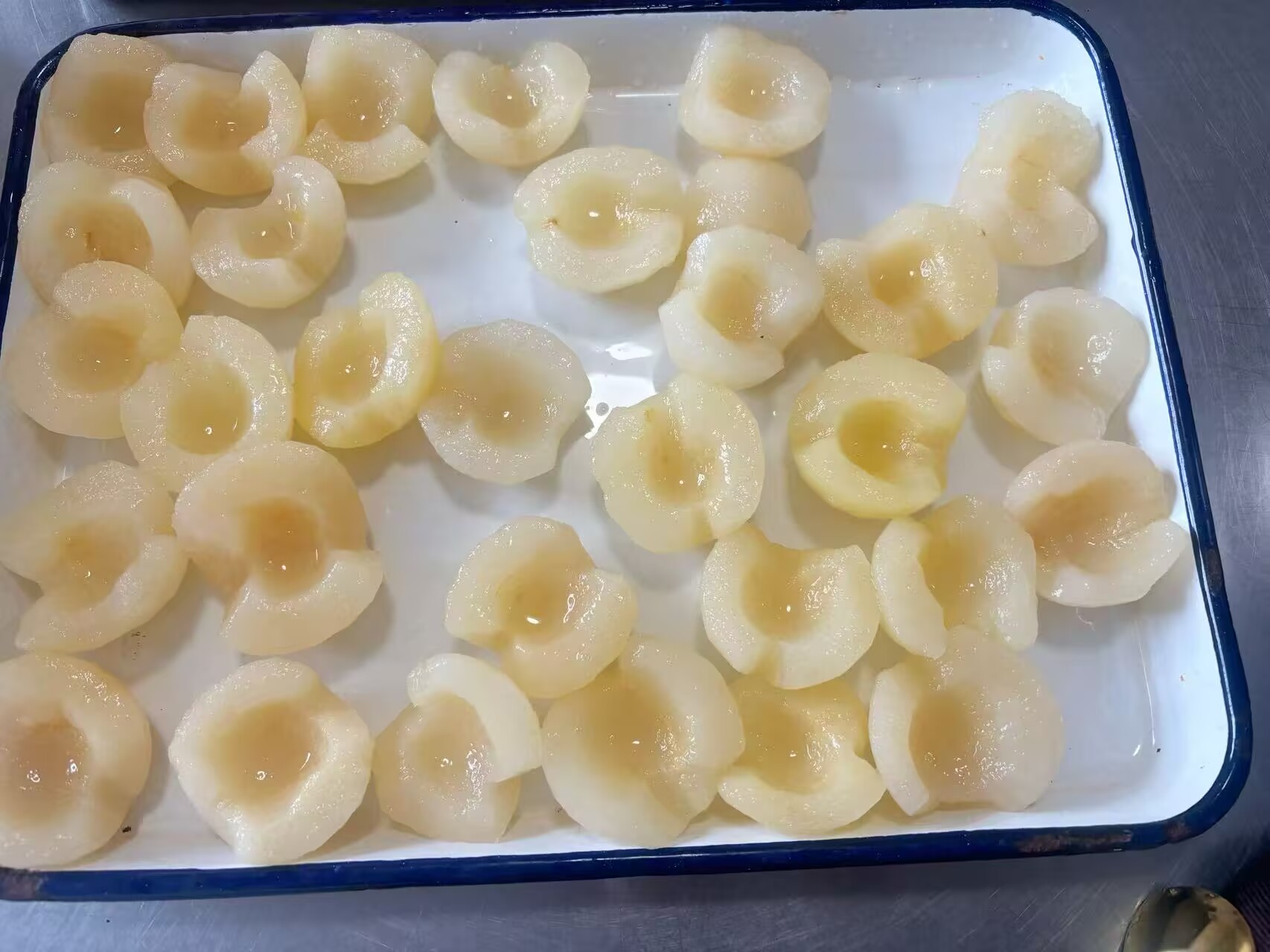
Cover: canned fruit in light syrup from the Agrogentra canned fruit range, which also includes mandarin oranges, pineapple, yellow peach, pear, fruit cocktail, cherries, applesauce, fruit jelly, fruit cups and lychee.
Why Dual Kosher and BRCGS Coverage Is the Real Constraint
Kosher certification and BRCGS certification answer two different questions, and most buyers need both answers in writing before a listing is approved.
Kosher certification answers a product composition question: are the fruit, its packing medium and the production line acceptable to kosher-observant consumers? A certificate such as STAR-K RIB1RR1Q, carrying Pareve, Dairy-Free and Meat-Free status, tells a buyer in Israel, the USA, Europe or the Middle East that the fruit — packed in light syrup — has no dairy and no meat component and can be listed in kosher assortments.
BRCGS certification answers a process control question: is the site's food safety system audited against a GFSI-benchmarked standard? Certificate 05LA1209004, issued under Issue 9 and valid to 2026-12-02, is the document a retail compliance team will request when it opens a supplier file.
The failure mode buyers hit most often is not a missing certificate. It is a certificate that exists but does not line up with the purchase:
- the certificate covers the site, but not the fruit species in the SKU;
- the certificate covers the species, but not the form produced on that line — whole segments, halves or dices;
- the certificate was valid at quotation stage but expires before shipment or destination clearance;
- the certificate is presented for a plant that is not the packing site quoted.
A fourth, packaging-side constraint now belongs to the same conversation in Europe. Regulation (EU) 2024/3190 restricts the use of Bisphenol A (BPA) in food contact materials, including can coatings, according to the European Commission. For an EU-bound canned fruit order, the internal can lining is part of the compliance file, not only the fruit.
Industry Background: Large Volume, Slower Growth, Tighter Documentation
Two figures frame the category. The global canned fruits and vegetables market reached USD 105.35 billion in 2024, according to Market Research Future. China alone exported USD 3.859 billion of fruit and vegetable canned products in 2024, according to data published by the China Canned Food Industry Association and China Customs, while China's canned vegetable export volume reached 2.058 million tons in the same year — a 2.52% year-on-year decrease.
Volume is not expanding quickly, so value discipline matters more than tonnage. In that environment buyers concentrate orders on fruit forms that sell predictably and that clear compliance in more than one market, rather than spreading purchases across long, shallow product lists.
That concentration is visible in the fruit mix itself. Canned peaches hold a dominant position in the canned fruit market, accounting for approximately 36.8% of the segment share in 2024, according to Market.us.
For a kosher or BRCGS-driven buyer, the practical reading is straightforward: the fruits worth ranking are the ones with repeatable demand and verifiable certificate scope — verified before the first purchase order, not after it.
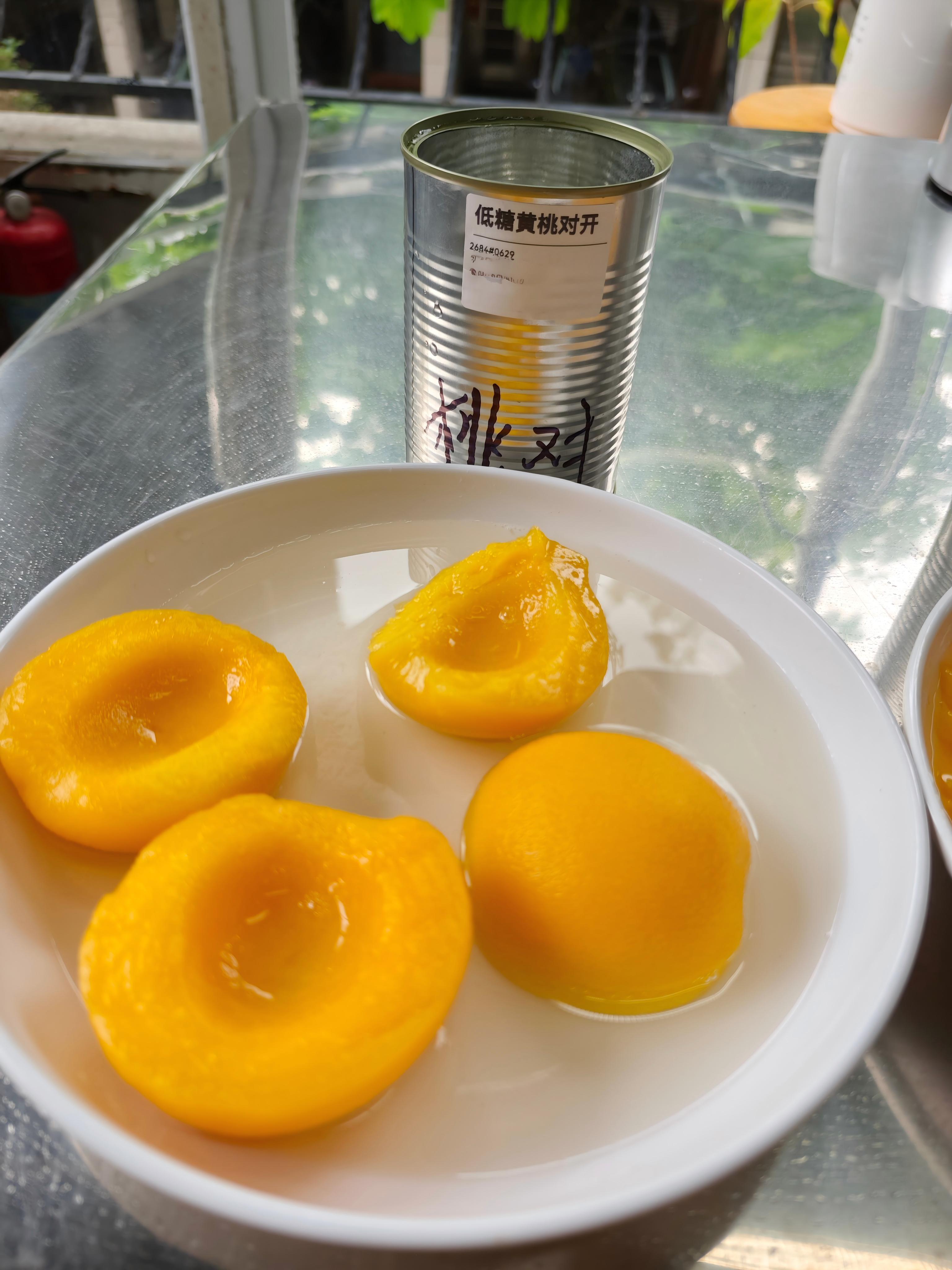
Canned yellow peach halves in light syrup — supplied in 425 g and 2950 g cans, in halves and dices.
The 2026 Shortlist: Four Canned Fruits Ranked
Ranking criteria used here: how explicitly the fruit appears in the certificate scope; how many can formats and fruit forms are available for that item; how well the pack fits ambient retail, catering and processing channels; and how consistently the item can be supplied against a single compliance file.
1. Canned Yellow Peach
Canned yellow peach ranks first because it is explicitly named in the ISO 22000:2018 certificate CNO0124F21626R5M/3200 scope, and because it is the largest single canned fruit segment: canned peaches accounted for approximately 36.8% of canned fruit market share in 2024, according to Market.us.
Formats: canned yellow peach is supplied in 425 g and 2950 g cans, in halves and in dices, packed in light syrup. The model designation covers 425 g, 2950 g, A9 and A10 can formats, with 36 months shelf life at normal temperature.
Kosher fit: the fruit and its light-syrup packing medium contain no dairy or meat component, which is consistent with the Pareve, Dairy-Free and Meat-Free declarations carried under STAR-K certificate RIB1RR1Q.
Buyer caution: halves and dices are different cost structures — they change drained weight, fill and price per can. State the form, net weight and packing medium in the specification before the certificate is quoted against it.
2. Canned Mandarin Oranges
Canned mandarin oranges rank second because they offer the widest whole-fruit format choice on this shortlist. They are supplied in A9 and A10 whole-segment styles in 425 g and 2950 g cans, and canned orange is named in the ISO 22000:2018 certificate scope alongside peach, pineapple, pear, apple and mixed fruit.
Whole-segment styles are commonly specified where the buyer wants the fruit visible in the pack, such as retail cans and catering trays, while the larger 2950 g formats suit foodservice and processing use.
Compliance fit: mandarin orange segments packed in light syrup fit the Pareve, Dairy-Free and Meat-Free position documented under STAR-K RIB1RR1Q, and the same BRCGS certificate 05LA1209004 covers the site-level food safety system.
Buyer caution: whole-segment products are sensitive to handling. Segment integrity, drained weight and syrup clarity are the three attributes worth writing into the specification and checking against the pre-shipment sample.
3. Canned Pear
Canned pear ranks third. It is named in the ISO 22000:2018 certificate scope, is supplied in 425 g and 2950 g cans packed in light syrup, and carries the same 36-month ambient shelf life as the rest of the canned fruit range.
Its value in a kosher assortment is practical rather than promotional: pear holds texture in catering and dessert use, and it can be listed with the same compliance documentation as peach and orange instead of adding a second supplier file and a second audit trail.
Buyer caution: pear is often a private-label item, so label, net weight and packing medium tend to be buyer-specific. Confirm that the specification you are labelling matches the certificate scope and the approved sample.
4. Canned Fruit Cocktail
Canned fruit cocktail ranks fourth. 'Mixed fruit' is named in the ISO 22000:2018 certificate CNO0124F21626R5M/3200 scope, and the product is supplied in 425 g and 2950 g cans in light syrup.
Why it still belongs on the shortlist: a single fruit cocktail SKU delivers several fruit types in one retail or foodservice line, which simplifies shelf assortment and container loading. The trade-off is that a blend is only as consistent as its least stable component, and every component must stay inside the same certified process.
Buyer caution: fix the fruit ratio, cut sizes and drained weight in the specification. Because cocktail is a blend, changes in the availability of any single fruit can affect the pack, so the specification should state which components are mandatory and which are flexible.
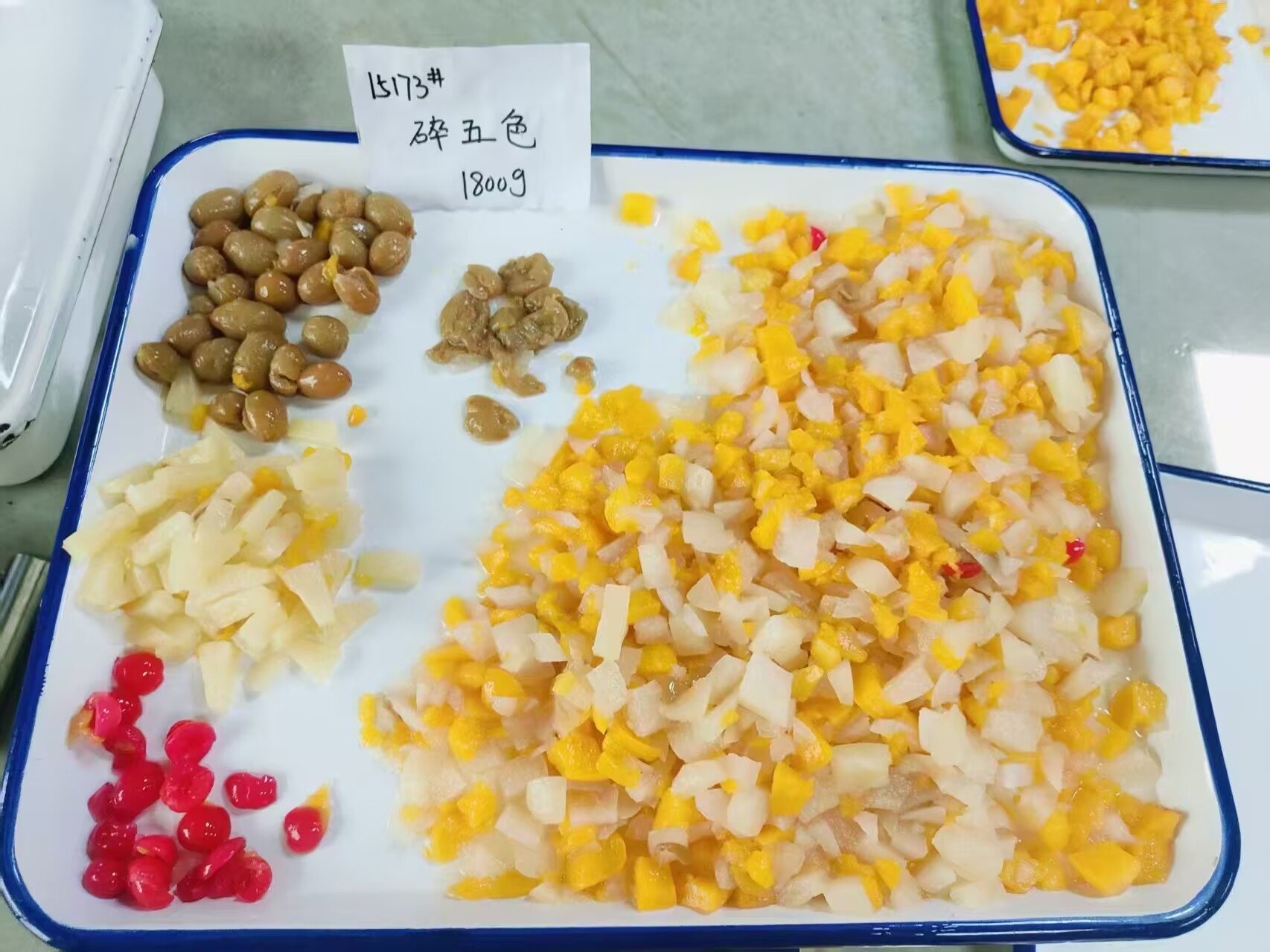
Canned fruit cocktail in light syrup — 'mixed fruit' is named in ISO 22000:2018 certificate CNO0124F21626R5M/3200.
Matching Certificate Scope to the Exact Canned Fruit Form: Step-by-Step
Most certificate disputes are avoidable with a short documentation routine. Run the following sequence before the first order, and repeat it at certificate renewal.
- Collect the current certificate set in writing. Ask for the STAR-K kosher certificate RIB1RR1Q, the BRCGS certificate 05LA1209004 under Issue 9 with its validity date (2026-12-02 as of this writing), and the ISO 22000:2018 certificate CNO0124F21626R5M/3200.
- Read the scope, not the cover page. Confirm that your fruit species is named in the scope. The ISO 22000:2018 scope names canned peach, pineapple, pear, orange, apple and mixed fruit — check that list before anything else.
- Match the form, not only the fruit. Whole segments (A9 / A10), halves and dices are different production specifications. State the form, net weight (425 g or 2950 g) and packing medium (light syrup) in the purchase specification, and confirm that the packing site producing that form is the site named on the certificate.
- Map the certificate to the destination market. Israel: kosher documentation is the gate. USA: expect a BRCGS certificate plus facility registration documentation. Europe: BRCGS plus food-contact compliance, including can coatings under Regulation (EU) 2024/3190. Middle East: kosher documentation plus destination labelling requirements. Name the market in the enquiry so the document pack is assembled for it.
- Confirm the on-pack claims you intend to print. Pareve, Dairy-Free and Meat-Free statements, net weight and packing medium should match both the certificate and the approved sample. Do not print a claim that is not documented.
- Check logistics assumptions against shelf life. The canned fruit range carries 36 months shelf life at normal temperature, is sterilized and contains no preservatives, and is designed for ambient storage and long-distance sea transportation — no cold chain is required for these items.
- Validate with samples and pre-shipment inspection. Sampling is where specification, certificate scope and label meet. Agrogentra's quality control process covers factory audits, raw material testing, production monitoring, finished product inspection and pre-shipment sampling, carried out by QC teams based in Xiamen and Qingdao.
- Diarise the certificate dates. The BRCGS certificate is valid to 2026-12-02. If shipment or destination clearance falls near that date, confirm the current version of the certificate and plan for the renewal cycle instead of relying on a PDF issued earlier in the year.
Quick scope rule: a certificate is only usable when three things line up — the fruit species, the production form and the packing site. If any one of the three is missing from the scope, request clarification before the order is placed.
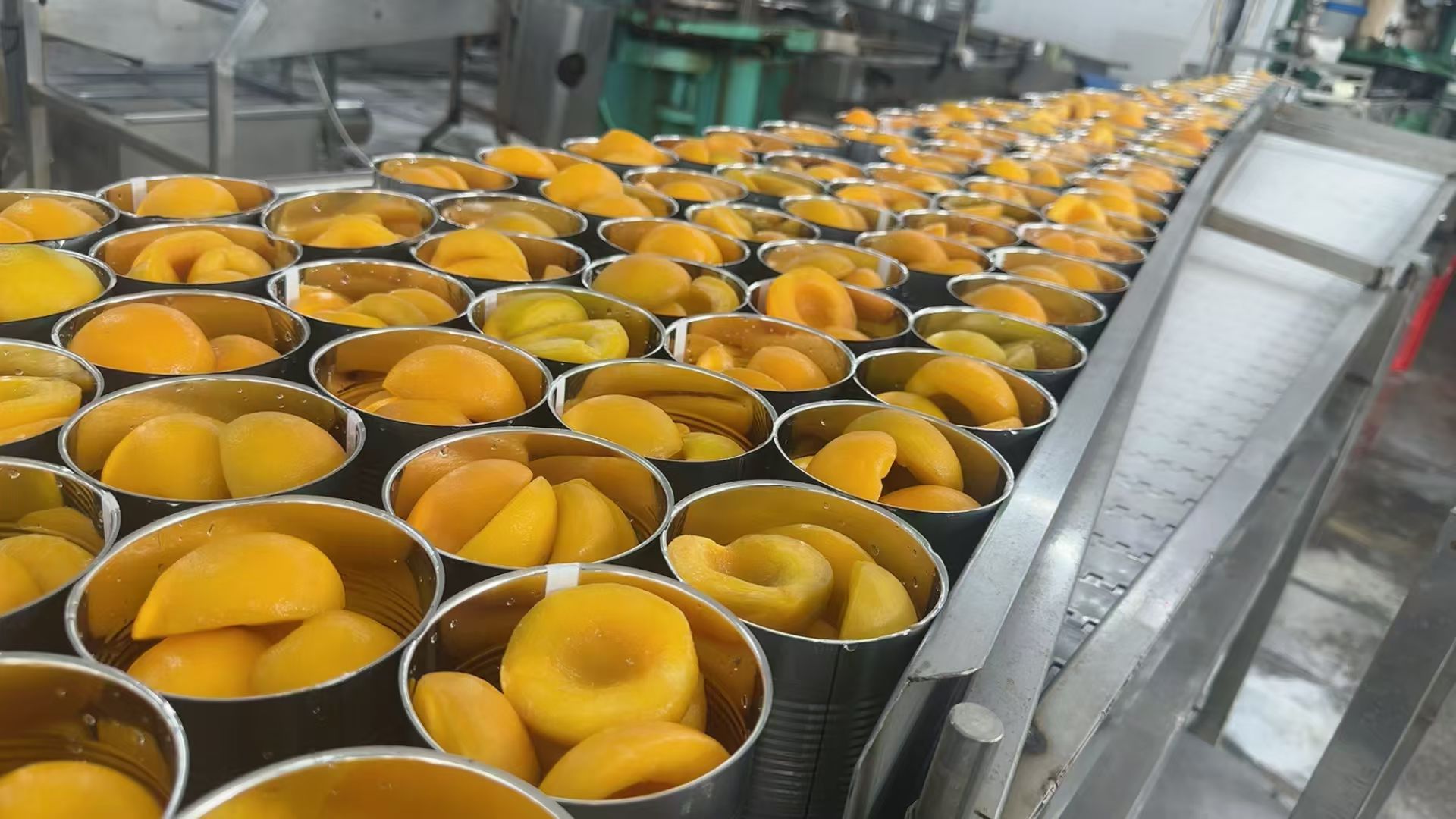
Production line at the packing site — process control, seaming and sterilization records sit inside the BRCGS Issue 9 audit file.
Where the Four Fruits Fit: Retail, Catering and Processing
Canned fruit is an ambient product, so the four shortlisted items serve the channels that cannot depend on cold chain:
- Grocery retail and supermarket import — ambient storage, direct consumption after opening, no special handling; the 425 g can is the standard retail format.
- Catering and foodservice — the 2950 g and A10 formats reduce opening and handling time in kitchens; the product is ready to eat after opening, with optional heating.
- Food processing — canned fruit is used as an ingredient in baking and dessert production, and stable ambient supply removes harvest-season dependency.
- Private label and mixed container programmes — specifications can be customised, and mixed container loading is available with full customs clearance documents.
- Kosher-sensitive assortments — Pareve, Dairy-Free and Meat-Free canned fruit fits dessert and fruit-salad listings in Israel, the USA, Europe and the Middle East, the markets named on STAR-K certificate RIB1RR1Q.
The canned fruit range extends beyond this shortlist: canned apricot, canned figs, canned lychee, canned cherries, canned applesauce, canned fruit jelly and ready-to-eat fruit cups are also supplied, alongside canned pineapple and canned apple products that fall within the ISO 22000:2018 scope.
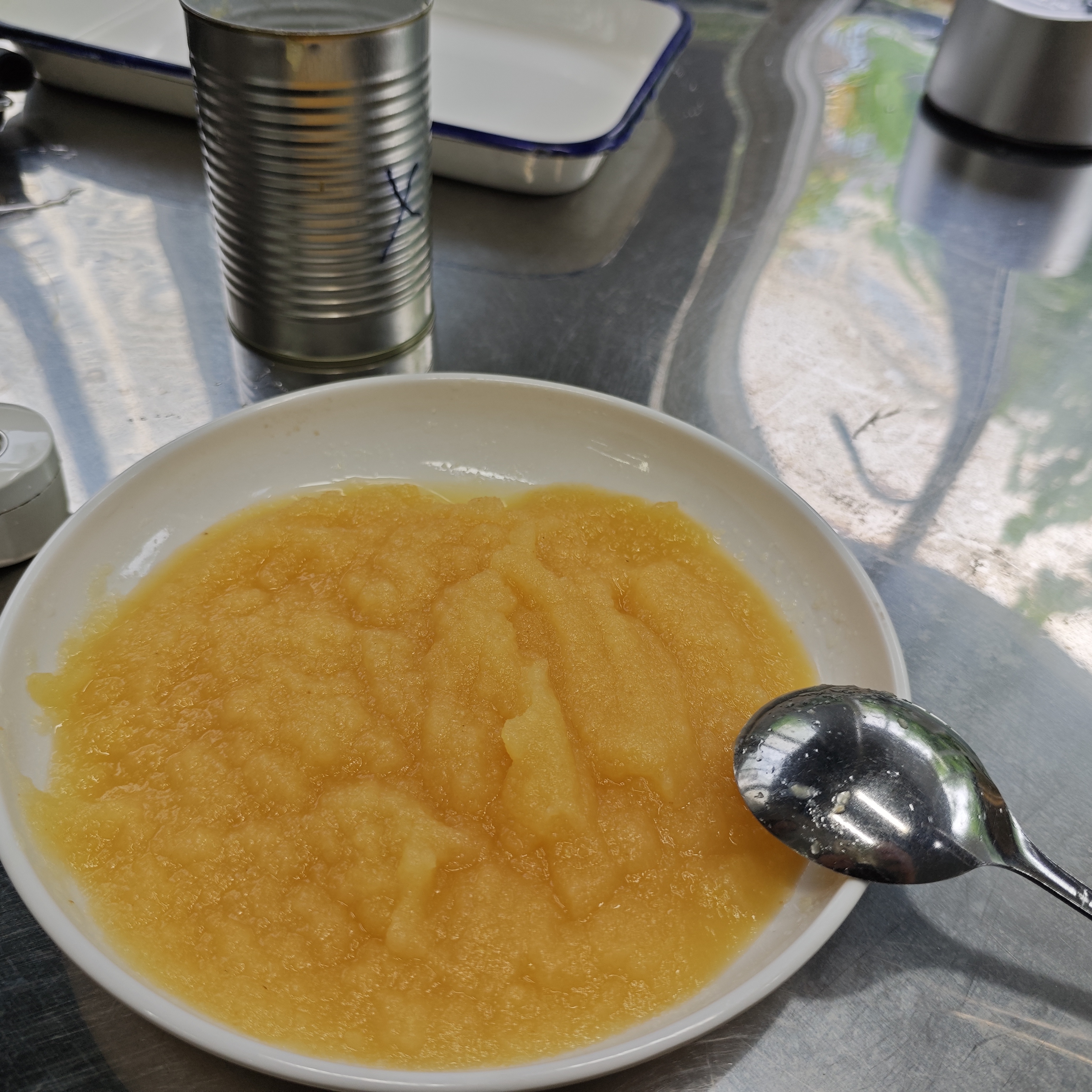
Canned applesauce from the wider canned fruit range — 'apple' is named in the ISO 22000:2018 certificate scope.
Comparison Table: The 2026 Shortlist at a Glance
| Rank | Canned fruit | Certificate coverage (evidence) | Can formats & style | Primary channel fit |
|---|---|---|---|---|
| 1 | Canned yellow peach | ISO 22000:2018 CNO0124F21626R5M/3200 (peach named); STAR-K RIB1RR1Q (Pareve, Dairy-Free, Meat-Free); BRCGS 05LA1209004, Issue 9, valid to 2026-12-02 | 425 g / 2950 g; halves and dices; light syrup; 36 months shelf life | Retail cans and foodservice dessert programmes |
| 2 | Canned mandarin oranges | ISO 22000:2018 scope (orange named); STAR-K RIB1RR1Q; BRCGS 05LA1209004 | A9 / A10 whole segments; 425 g / 2950 g; light syrup | Retail, catering trays, kosher dessert lists |
| 3 | Canned pear | ISO 22000:2018 scope (pear named); STAR-K RIB1RR1Q; BRCGS 05LA1209004 | 425 g / 2950 g; light syrup; 36 months shelf life | Private label, catering, dessert production |
| 4 | Canned fruit cocktail | ISO 22000:2018 scope (mixed fruit named); STAR-K RIB1RR1Q; BRCGS 05LA1209004 | 425 g / 2950 g; light syrup; multi-fruit blend | Retail SKUs, foodservice, food processing |
Certificate references: STAR-K kosher certificate RIB1RR1Q; BRCGS certificate 05LA1209004 under Issue 9, valid to 2026-12-02; ISO 22000:2018 certificate CNO0124F21626R5M/3200. Product facts reflect the standard canned fruit specification: light syrup packing medium, 36 months shelf life at normal temperature, sterilized with no preservatives.
FAQ
Agrogentra & CO., LTD. XIAMEN, a canned food exporter established in 2000 in Xiamen, China, supplies canned fruit and canned vegetables against STAR-K kosher certificate RIB1RR1Q (Pareve, Dairy-Free, Meat-Free, serving Israel, USA, Europe and Middle East markets) and BRCGS certificate 05LA1209004 issued under Issue 9 and valid to 2026-12-02. ISO 22000:2018 certificate CNO0124F21626R5M/3200 supports the canned peach, pineapple, pear, orange, apple and mixed fruit range. Buyers should still confirm that the certificate scope matches the exact fruit species and fruit form being purchased.
The canned fruit range includes canned mandarin oranges, canned pineapple, canned yellow peach, canned pear, canned fruit jelly, canned fruit cocktail, canned cherries, canned applesauce, canned lychee and ready-to-eat fruit cups, with canned apricot and canned figs also supplied. Formats cover 425 g and 2950 g net weight and A9 and A10 whole-segment can styles; the standard packing medium is light syrup, shelf life is 36 months at normal temperature, and the products are sterilized with no preservatives. Applications include food and beverage wholesale, catering, supermarket retail and food processing.
The main cost drivers are the can format (425 g versus 2950 g, A9 or A10), the fruit form (whole segments, halves or dices), the packing medium, the fruit ratio in blended products such as fruit cocktail, order volume and mixed container loading, and any private-label specification. Because price is tied to specification, a compliant quotation should be requested against a defined fruit, form, net weight, packing medium and destination market rather than against a product name alone.
Yes. Sampling is how specification, certificate scope and label are validated before volume purchasing. The quality control process covers factory audits, raw material testing, production monitoring, finished product inspection and pre-shipment sampling, handled by QC teams based in Xiamen and Qingdao. Sample and specification requests can be sent to charles.cai@agrogentra.com, miya.kang@agrogentra.com or susie.xie@agrogentra.com, or raised by telephone on +86-592-5393122.
Lead time for these items depends on the can format, the fruit form and the order quantity, so it should be confirmed in the quotation for the specific specification. Certificate validity has to be planned on the same timeline: BRCGS certificate 05LA1209004 is valid to 2026-12-02, so orders shipping near that date should be confirmed against the current certificate version. Because the products store at ambient temperature with 36 months shelf life and need no cold chain, production and shipping can be scheduled without temperature-controlled logistics constraints. A practical next step is to send the target specification, destination market and required delivery window so the document pack and the production slot can be confirmed together: charles.cai@agrogentra.com, or download the Agrogentra product leaflet.
Conclusion: The Checklist to Take Into Your Next Enquiry
The 2026 ranking for buyers who need kosher and BRCGS coverage in one supplier relationship is: yellow peach first (largest canned fruit segment and named in the ISO 22000:2018 scope), mandarin oranges second (A9 / A10 whole-segment formats), pear third (named in scope, private-label friendly), and fruit cocktail fourth (mixed fruit in scope, multi-fruit efficiency with a stricter blend specification).
Before you place an order, run this checklist:
- Certificate set: STAR-K RIB1RR1Q, BRCGS 05LA1209004 (Issue 9, valid to 2026-12-02), ISO 22000:2018 CNO0124F21626R5M/3200.
- Scope match: is your fruit species named in the certificate scope?
- Form match: whole segments, halves or dices — stated in the specification?
- Pack match: 425 g or 2950 g, light syrup, 36 months shelf life.
- Market match: Israel, USA, Europe or Middle East documentation requirements, plus can-coating compliance for the EU.
- Site match: does the certificate site match the packing plant producing your form?
- Claim match: Pareve, Dairy-Free, Meat-Free, net weight and packing medium verified against the approved sample?
- Date match: does certificate validity cover shipment and destination clearance?
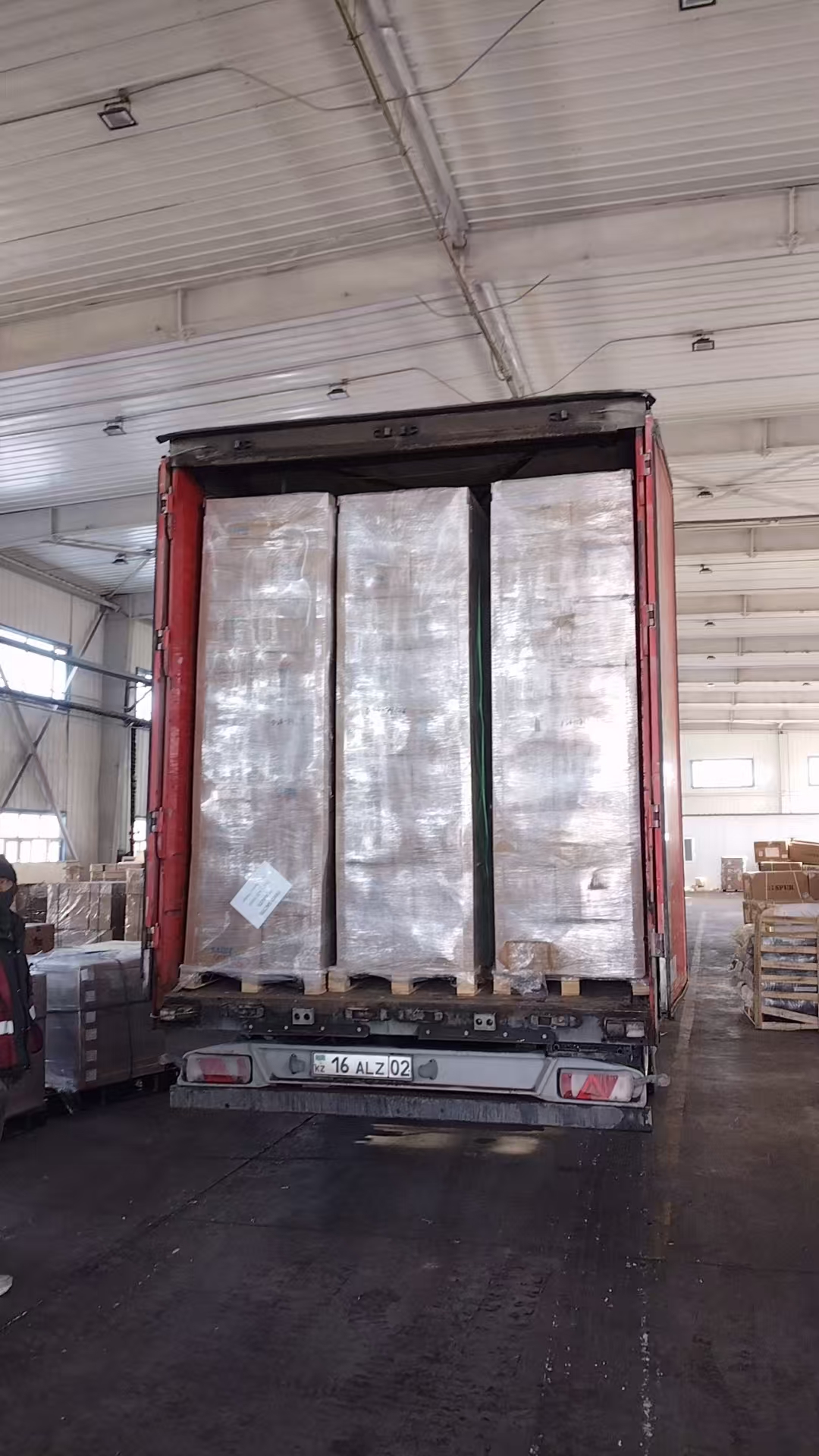
Container loading for an export order — ambient canned fruit requires no cold chain for sea freight.
Next step: send your target canned fruit specification — fruit, form, net weight, packing medium, destination market and required delivery window — to the Agrogentra export team. Samples, quotations and the full product catalogue are available on request.
Email: charles.cai@agrogentra.com | miya.kang@agrogentra.com | susie.xie@agrogentra.com
Tel: +86-592-5393122, +86-592-2291213
Website: www.agrogentra.com
Address: 1F, Yundang Road 1-39, Siming District, Xiamen, Fujian Province, China
Download the Agrogentra product leaflet (PDF)
Have Questions or Need More Details?
Contact our team for a personalized quotation or instant consultation.
Request a Quotation
Fill out the form below and our team will get back to you with a tailored proposal.
WhatsApp Direct Chat
Prefer to chat in real-time? Message us on WhatsApp for instant assistance & quick answers.
- Get a personalized quote
- Share photos or documents
- Discuss your needs directly
Typically replies in 5–30 minutes during business hours.