Halal Compliance for Canned Sardines and Mackerel: Malaysia and Indonesia Market Guide
Halal certificate 8998250000, issued by SHC (Shandong Halal Certification Service Co., Ltd.), is valid from 1 July 2025 to 30 June 2028. Its recorded scope includes Canned Sardines in Oil, Canned Sardines in Tomato Sauce, Canned Sardines in Brine, Canned Mackerel in Tomato Sauce, Canned Mackerel in Oil and Canned Mackerel in Brine. The certificate references MS1500:2019 for Malaysia, where recognition sits with JAKIM, and Indonesia Halal Law Regulations for Indonesia, where recognition sits with BPJPH. Two things should be confirmed in writing before a container is booked: that the exact species and packing medium on the purchase order appears as a scope line, and that the destination market requirement has been checked against that market's own framework. The same supply is covered by BRCGS certificate 051A1312001 for the manufacturing of canned mackerel, sardine and canned tuna, which is a food-safety certification and not a Halal statement.

Problem Definition: Halal Status Is a Scope, Not a Logo
Halal compliance for canned fish is decided by matching documents, not by a printed mark on the lid. A certificate defines a scope: named product presentations, a referenced standard, an issuing authority and a validity window. A purchase order defines something different: species, packing medium, net weight, label artwork and destination market. Compliance failures happen in the gap between those two documents, and they usually appear late, at the port or during a customer audit.
Four failure patterns repeat on first shipments into Malaysia and Indonesia:
- Wording mismatch. The order says sardines in vegetable oil while the certificate records sardines in oil. The product is the same; the paperwork is not.
- Mixed product families on one order. A container combining sardines, mackerel and tuna is not covered by the sardine and mackerel scope lines alone, because the recorded Halal scope lists canned sardines and canned mackerel but does not list canned tuna.
- Validity drift. Repeat call-offs scheduled beyond a certificate expiry date, where the certificate on file was valid only for the first shipment.
- Framework conflation. Assuming that a certificate recognised for one market automatically satisfies the other, when Malaysia references MS1500:2019 and Indonesia references Indonesia Halal Law Regulations.
The commercial weight behind those four points is not marginal. Global canned seafood was valued at USD 57.69 billion in 2025 (Fortune Business Insights), and the canned fish segment holds a 75.3% share of that market (Grand View Research). Global imports of canned and prepared fish under HS 1604 reached 3.2 million tonnes, worth USD 17.54 billion, in 2023 (UN Comtrade, FAO-derived). Each of those consignments had to answer the same scope question this guide answers for sardines and mackerel.
Industry Background: Two Halal Frameworks, One Production Line
Malaysia and Indonesia regulate Halal entry through separate reference frameworks, and the certificate used across this supply names both:
- Malaysia: MS1500:2019, recognised by JAKIM.
- Indonesia: Indonesia Halal Law Regulations, recognised by BPJPH.
For a supplier, the operational value of a certificate that references both frameworks is that one production run can serve two markets without running two certification programmes. For a buyer, the value is narrower and more precise: it removes one class of document risk, but it does not transfer the market-side obligations that sit with the importer of record. Registration, label approval and product notification in the destination market remain buyer-side confirmations.
Trade structure explains why canned fish carries so much compliance weight in both markets. Canned tuna alone represents 43% of global canned fish import volume under HS 1604 (UN Comtrade), so the category is concentrated in a few species, principally sardines, mackerel and tuna, and a few packing media, principally oil, tomato sauce and brine. A scope-based certificate suits that structure, because each scope line can be matched to a specific order line.
The production context matters too. Canned fish is a low-acid, ambient-stable product: cans are hermetically sealed and then commercially sterilised, which is why unopened cans carry a 36-month shelf life without preservatives. Halal control in this category is exercised upstream, in raw-material sourcing and in pre-canning handling, while retort sterilisation functions as a food-safety control rather than a Halal control. That division is exactly why the certificate scope and the BRCGS scope answer different questions.
Detailed Solution: What Certificate 8998250000 Actually States
The certificate is short, specific and worth reading line by line before it is forwarded to a customer. These are the recorded attributes:
Halal certificate record
- Certificate number
- 8998250000
- Certification type
- HALAL
- Issuing authority
- SHC (Shandong Halal Certification Service Co., Ltd.)
- Standard referenced
- Indonesia Halal Law Regulations / MS1500:2019
- Issue date
- 1 July 2025
- Expiry date
- 30 June 2028
- Indonesia recognition
- Compliant with Indonesia Halal Law Regulations, recognised by BPJPH
- Malaysia recognition
- Conforms to MS1500:2019, recognised by JAKIM
- Recorded product scope
- Canned Mackerel in Tomato Sauce; Canned Mackerel in Oil; Canned Mackerel in Brine; Canned Sardines in Tomato Sauce; Canned Sardines in Oil; Canned Sardines in Brine; frozen sardine; frozen mackerel; frozen tuna; frozen leather jacket; frozen mullet; frozen pomfret
The scope text as recorded continues beyond the frozen fish entries, so the complete scope wording should be requested from the supplier and attached to the purchase order rather than summarised from a marketing page.
Canned sardines in oil, in tomato sauce and in brine
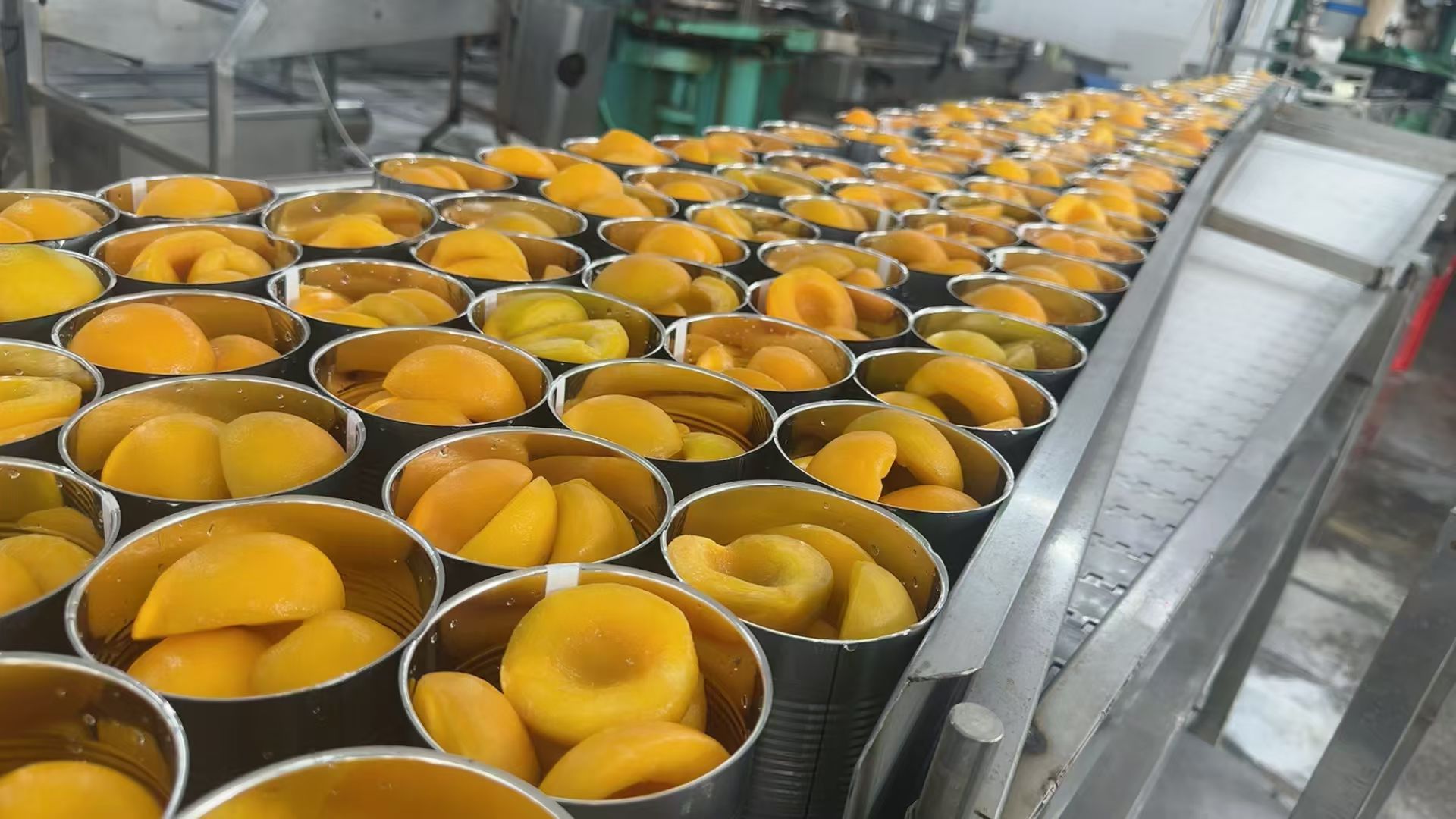
Three sardine presentations are listed: Canned Sardines in Oil, Canned Sardines in Tomato Sauce and Canned Sardines in Brine. These map onto the standard specification range for the line, with net weights of 125 g, 170 g (843#), 425 g and 1000 g, packed in vegetable oil, in tomato sauce or brined, fully sterilised and ready to eat, with 36 months of shelf life at ambient temperature. Because the scope is written at presentation level, an order for sardines in oil has a direct one-to-one match with a scope line. A presentation that is not listed should be treated as a new scope question rather than as an extension of an existing line.
Canned mackerel in tomato sauce and its variants
The mackerel entries follow the same logic: Canned Mackerel in Tomato Sauce, Canned Mackerel in Oil and Canned Mackerel in Brine. Mackerel in tomato sauce is the highest-volume of the three in most retail assortments, and it is also the presentation most often ordered alongside sardines in the same container. Because both species sit inside the same certificate and the same validity window, a mixed sardine and mackerel order does not create a split-document problem. That is the practical benefit of the current scope for a distributor building a mixed container.
What sits outside the Halal scope: canned tuna
Canned tuna is the most common misreading of this documentation set. The BRCGS certificate covers it; the Halal certificate, as recorded, does not list it. BRCGS certificate 051A1312001, issued by Intertek Certification Ltd (UKAS Accredited Body No. 014), covers the manufacturing of canned mackerel, sardine and canned tuna under the BRCGS Global Standard for Food Safety, Issue 9 (August 2022). That is a GFSI-recognised food-safety certification with global market applicability. It does not assert Halal status. A buyer whose range includes Halal tuna should request written confirmation of that specific scope rather than infer it from the BRCGS document, and this is precisely the kind of scope question worth resolving before the container is loaded rather than after.
Two validity windows, two different renewal dates
The Halal certificate runs from 1 July 2025 to 30 June 2028. The BRCGS certificate was issued on 27 January 2026 and expires on 13 February 2027. Because the BRCGS certificate expires roughly sixteen months earlier than the Halal certificate, a supply programme that extends past February 2027 needs the BRCGS renewal in the file before production is scheduled, not after. This is the single most practical scheduling point in the entire documentation set, and it is the one most often missed by buyers who only track the Halal expiry date.
Step-by-Step Breakdown: Seven Pre-Shipment Checks
The sequence below converts the certificate record into an order-level verification routine. Each step produces a document or a written confirmation that can be filed with the shipment.
- Match the order line to a scope line, word by word. Confirm species, packing medium and presentation against the certificate wording, and record the certificate number and matched scope line on the purchase order. This single step removes the most common cause of rejection.
- Check the production date against both validity windows. Halal coverage runs to 30 June 2028; BRCGS coverage runs to 13 February 2027. A call-off produced in March 2027 is inside the Halal window and outside the BRCGS window.
- Confirm the destination framework separately. For Malaysia, the referenced standard is MS1500:2019 with JAKIM recognition. For Indonesia, the reference is Indonesia Halal Law Regulations with BPJPH recognition. A SKU shipping to both markets should have both confirmations on file.
- Request the export documentation set. The supplier provides a full set including COA, health certificate, pre-shipment inspection report and traceability report, and factory certification copies can be provided for buyer audit.
- Approve label and OEM artwork before printing. OEM production is offered with logo customisation, including OEM formula and label design support. The product name printed on the label should match the scope wording, not a shortened sales name.
- Confirm specification and order structure. Net weights of 125 g, 170 g (843#), 425 g and 1000 g; minimum order quantity is a mixed FCL with LCL available upon negotiation; lead time is 4 to 6 weeks; delivery terms are FOB; payment terms are T/T with 30% deposit and the balance against a copy of the B/L.
- Book pre-shipment inspection and agree sample retention. Acceptance inspection covers cargo quantity, packaging and appearance. Quality control follows full-process control, including incoming raw-material inspection, on-line production patrol, and laboratory physical, chemical and microbiological testing for each batch with a COA report. Batch samples are retained, and third-party inspection by SGS or Intertek is acceptable.
Use Cases: Where This Scope Fits
Malaysian grocery distributor building an own-label range. A 425 g sardine in tomato sauce line for supermarket shelves, ordered under OEM with distributor logo, matches a listed presentation directly. The only additional work is the market-side label approval, which sits with the importer of record.
Indonesian wholesaler supplying convenience and catering channels. A 170 g (843#) mackerel in tomato sauce line suits small-format retail and foodservice pack sizes. Because it sits inside the same certificate as sardines, the wholesaler can combine both species in one mixed FCL and keep one compliance file rather than two.
Foodservice and institutional supplier. A 1000 g pack for volume kitchens relies on ambient storage and a 36-month shelf life, which removes cold-chain dependency from the distributor's cost base. Halal scope and shelf life are confirmed from the same document set.
Private-label brand owner. OEM production with logo customisation, supported by OEM formula and label design, allows a brand owner to build a sardine and mackerel range without owning a canning line. The certificate scope sets the outer boundary of what can carry the brand under this supply.
Mixed-FCL importer. A container that combines canned sardines, canned mackerel and non-fish lines such as canned tomato paste or canned vegetables needs care: only the fish presentations listed on the Halal certificate fall inside this scope, so every additional category requires its own verification rather than an assumption of coverage.
Comparison Table: What Each Certificate Proves
The two certificates answer different questions and should never be used interchangeably in a buyer file.
| Attribute | Halal certificate 8998250000 | BRCGS certificate 051A1312001 |
|---|---|---|
| Issuing body | SHC (Shandong Halal Certification Service Co., Ltd.) | Intertek Certification Ltd (UKAS Accredited Body No. 014) |
| Standard or framework | Indonesia Halal Law Regulations / MS1500:2019 | BRCGS Global Standard for Food Safety, Issue 9 (August 2022) |
| Scope | Canned sardines and canned mackerel in tomato sauce, oil and brine, plus listed frozen fish | Manufacturing of canned mackerel, sardine and canned tuna |
| Validity | 1 July 2025 to 30 June 2028 | Issued 27 January 2026, expires 13 February 2027 |
| Market recognition | Indonesia (BPJPH), Malaysia (JAKIM) | Global market, GFSI-recognised |
| What it proves | Listed fish presentations fall within a Halal scope referenced to both destination frameworks | The manufacturing site is certified under a GFSI-recognised food-safety management system for mackerel, sardine and tuna |
| What it does not prove | It does not replace a food-safety management system certificate, and it does not cover unlisted presentations such as canned tuna | It does not assert Halal status for any product |
Comparison Table: Malaysia and Indonesia at a Glance
| Check point | Malaysia | Indonesia |
|---|---|---|
| Framework referenced on the certificate | MS1500:2019 | Indonesia Halal Law Regulations |
| Recognising body named | JAKIM | BPJPH |
| Presentations in scope for this guide | Canned Sardines in Oil, in Tomato Sauce, in Brine; Canned Mackerel in Tomato Sauce, in Oil, in Brine | Canned Sardines in Oil, in Tomato Sauce, in Brine; Canned Mackerel in Tomato Sauce, in Oil, in Brine |
| Certificate validity | 1 July 2025 to 30 June 2028 | 1 July 2025 to 30 June 2028 |
| Buyer-side confirmation before shipment | Confirm the product name and packing medium on the purchase order match a scope line, and that market-side label approval is complete | Confirm the product name and packing medium on the purchase order match a scope line, and that market-side registration with the importer of record is complete |
FAQ
Does Halal certificate 8998250000 cover canned tuna as well as canned sardines and mackerel?
No. As recorded, the Halal scope lists Canned Sardines in Tomato Sauce, Canned Sardines in Oil, Canned Sardines in Brine, Canned Mackerel in Tomato Sauce, Canned Mackerel in Oil and Canned Mackerel in Brine, together with frozen sardine, mackerel, tuna, leather jacket, mullet and pomfret. Canned tuna is not among the listed canned products. Canned tuna is covered separately by BRCGS certificate 051A1312001, whose scope is the manufacturing of canned mackerel, sardine and canned tuna. A buyer requiring Halal canned tuna should request written confirmation of that specific scope before ordering.
Can Agrogentra Canned Foods produce private-label canned sardines and mackerel under our own brand?
Yes. OEM production is offered with logo customisation, supported by OEM formula and label design. The minimum order quantity is a mixed FCL, with LCL available upon negotiation. Stated monthly capacity is 3,500 units and lead time is 4 to 6 weeks. Because the label carries the buyer brand, the product name printed on it should be matched to the Halal scope wording, not to a shortened sales name.
What are the purchasing terms for a first Halal canned fish order?
Minimum order quantity is a mixed FCL, and LCL orders are available upon negotiation. Delivery terms are FOB. Payment terms are T/T with 30% deposit and the balance against a copy of the B/L. Acceptance inspection is pre-shipment inspection, checking cargo quantity, packaging and appearance.
Can we receive samples and certificate copies before placing an order?
Yes. Samples are provided on the customer's courier cost, and factory certification copies can be provided for buyer audit. Quality control follows full-process control, including incoming raw-material inspection, on-line production patrol, and laboratory physical, chemical and microbiological testing for each batch with a COA report, with batch samples retained. Third-party inspection by SGS or Intertek is acceptable where a buyer requires independent verification.
How long is the certification valid, and how long does production and documentation take?
Halal certificate 8998250000 is valid from 1 July 2025 to 30 June 2028, referenced to MS1500:2019 for Malaysia and Indonesia Halal Law Regulations for Indonesia. BRCGS certificate 051A1312001 was issued on 27 January 2026 and expires on 13 February 2027. Production lead time is 4 to 6 weeks and finished cans carry a 36-month shelf life at ambient temperature. Because the two certificates expire on different dates, buyers scheduling call-offs after February 2027 should request the renewed BRCGS certificate before production begins. The product range and documentation set are summarised in the Agrogentra leaflet, and sample or quotation requests can be sent directly to the contact below.
Conclusion: Verify the Scope Line, Then Verify the Calendar
Halal compliance for canned sardines and mackerel entering Malaysia and Indonesia is a two-part exercise. The first part is scope: confirming that the species and packing medium on the order appear as a line on certificate 8998250000, which covers Canned Sardines in Oil, in Tomato Sauce and in Brine, and Canned Mackerel in Tomato Sauce, in Oil and in Brine. The second part is calendar: confirming that production and shipment fall inside both the Halal validity window ending 30 June 2028 and the BRCGS validity window ending 13 February 2027.
Everything else follows from those two checks. Canned tuna stays outside the Halal scope and inside the BRCGS scope, so it needs its own confirmation. Malaysia references MS1500:2019 with JAKIM recognition, Indonesia references Indonesia Halal Law Regulations with BPJPH recognition, so a SKU sold into both markets needs both files. Labels must match scope wording, not sales wording. And because the supplier runs OEM production with logo customisation, the buyer controls the label but not the scope, which is precisely why the scope should be read before the artwork is approved.
Request Samples, Certificates or a Quotation
Agrogentra & Co., Ltd. has supplied canned food to international buyers since 2000 from Xiamen, China, with QC teams in Xiamen and Qingdao. Halal and BRCGS certificate copies, product samples and OEM label proposals for canned sardines and canned mackerel can be arranged on request.
Email: charles.cai@agrogentra.com | Tel: +86-592-5393122 | WhatsApp: +8618150918630
Website: www.agrogentra.com | Product leaflet: download PDF
Address: 1F, Yundang Road 1-39, Siming District, Xiamen, Fujian Province, China
Have Questions or Need More Details?
Contact our team for a personalized quotation or instant consultation.
Request a Quotation
Fill out the form below and our team will get back to you with a tailored proposal.
WhatsApp Direct Chat
Prefer to chat in real-time? Message us on WhatsApp for instant assistance & quick answers.
- Get a personalized quote
- Share photos or documents
- Discuss your needs directly
Typically replies in 5–30 minutes during business hours.