FDA Food Facility Registration vs BRCGS for Canned Fruit: Which One Does an Import Need?
Two documents travel with almost every container of canned fruit, and importers routinely treat them as interchangeable. They are not. The FDA Food Facility Registration (No. 18082639404, product ID 7410) answers a market-access question: is this foreign facility registered to manufacture, process, pack or label fruit and fruit products for the United States? The BRCGS certificate (No. 05LA1209004, Issue 9) answers a process-verification question: has an independent certification body audited how that canned fruit is washed, peeled, pre-cooked, filled, seamed and pasteurized?
If the shipment is entering the United States and a customs broker is asking for paperwork, the relevant document is the FDA registration. If a retailer's supplier-approval or quality-assurance team is opening your file, the relevant document is the BRCGS certificate. Sending one where the other was requested is one of the most common reasons a canned fruit order stalls between the port and the shelf.
This guide is written for importers, procurement managers and private-label brand owners who already hold a document pack and need to route each file correctly. It covers what each document is, what it does not cover, how to match document scope to the actual SKU, and a six-step check that keeps both documents in the right hands.
Problem definition: the document is not missing, it is misrouted
A canned fruit import file rarely fails because a certificate does not exist. It fails because the right certificate went to the wrong desk. In a typical purchase, the buyer holds an FDA Food Facility Registration, a BRCGS certificate, and a batch-level layer made up of a Certificate of Analysis (COA), a health certificate, a pre-shipment inspection report and a traceability report. Each of these answers a different question, and each question is asked by a different person inside the buying organisation.
The confusion has three practical causes:
- Both documents are called 'certificates'. The FDA Food Facility Registration is a regulatory registration tied to a facility and a product category. The BRCGS document is a third-party certification tied to a defined scope and a fixed validity period. The naming similarity hides the difference in function.
- Both carry a number that looks like an approval code. Registration No. 18082639404 and certificate No. 05LA1209004 are identifiers, not scores. Neither number, on its own, tells a buyer how a canning line performs.
- Different people in the same organisation ask for different things. The customs broker asks about market access. The retailer's QA team asks about process control. The insurer asks about traceability. The buyer often forwards one PDF to all three.
The cost of misrouting shows up as request loops rather than as a single dramatic failure: a second document request, a delayed release, an extra supplier-approval cycle, or an additional audit visit arranged because the certification on file did not cover the product actually ordered. The decision this guide supports is therefore not 'which document is better' but 'which question is on the table'.
Industry background: why the two documents diverged
The canned fruit trade is large enough that documentation discipline matters at scale. The global market for canned fruits and vegetables reached USD 105.35 billion in 2024, according to Market Research Future. China alone exported US$3.859 billion worth of fruit and vegetable canned products in that year, per China Canned Food Industry Association and China Customs data. Within the canned fruit segment, canned peaches hold a dominant position, at approximately 36.8% of segment share in 2024, according to Market.us.
Those figures explain why peach, pear, pineapple and mixed-fruit lines attract the most documentation scrutiny: they are the highest-volume items, so they are the items retailers and customs authorities review most often. They also explain why a supplier's document pack tends to be built around fruit categories rather than around a single SKU.
Regulatory requirements then diverge by destination market, and this is the second reason the two documents cannot be collapsed into one. The European Union, for example, implemented Regulation (EU) 2024/3190 restricting the use of Bisphenol A (BPA) in food contact materials, including can coatings - a requirement that is separate from both US market access and third-party food safety certification. A supplier selling into several regions maintains several documentation layers, and each layer has its own audience.
Agrogentra & Co., Ltd. Xiamen illustrates how that layering looks in practice. Established in 2000 and located in Xiamen, China, the company supplies canned food, fresh fruits and vegetables and frozen products to the United States, Europe, Latin America and Africa, and operates QC teams in both its Xiamen and Qingdao offices covering factory audits, raw material testing, production monitoring, finished product inspection and pre-shipment sampling. The FDA registration and the BRCGS certificate described below are two different outputs of the same quality system, aimed at two different readers.
Detailed solution: what each document does and does not do
FDA Food Facility Registration No. 18082639404 (product ID 7410)
This is a US-market regulatory registration that applies to foreign facilities manufacturing, processing, packing or labeling fruit and fruit products, including acidified and low-acid processing. It is held by the facility, tied to a product category under product ID 7410, and it is the document US customs brokers and buyers ask for when a foreign facility ships fruit and fruit products into the United States.
Two features matter to a procurement team. First, the registration includes a designated U.S. Agent, Diana Liu, who acts as the US-based point of contact between the registered facility and the FDA. For an importer, that means there is a named person who can respond to routine FDA correspondence about the registration. Second, the registration is a status, not an audit result: it confirms that the facility is registered for the relevant product category, and it does not report how seaming or pasteurization parameters are controlled.
BRCGS Certification No. 05LA1209004, Issue 9
The BRCGS certificate is a third-party certification issued by Intertek. Certificate No. 05LA1209004, Issue 9, is valid from 2025-10-05 to 2026-12-02. The scope covers canned peach, apple, pear, pineapple, orange and mixed fruits, and the audited processes within that scope include washing, peeling, pre-cooking, filling, seaming and pasteurization.
For a buyer, the value of this document is that it names processes rather than products alone. A retailer's supplier-approval team can read the scope and see that the seaming and pasteurization steps - the two steps most directly linked to can integrity and commercial sterility - fall inside the audited boundary.
Where the boundaries sit
Reading the two documents side by side makes the boundary clear:
- The FDA registration does not audit the plant. It does not report seaming integrity, pasteurization curves or microbiological results. It confirms registration status for fruit and fruit products.
- The BRCGS certificate does not grant market access. It does not replace a facility registration for the United States, and it does not certify compliance with destination-market food contact material rules such as Regulation (EU) 2024/3190.
- Neither document replaces batch-level evidence. Agrogentra's export document set includes a COA, health certificate, pre-shipment inspection report and traceability report. Those are the documents that connect a specific container to a specific production batch.
Practical rule: FDA registration answers 'may this facility ship to the US?' BRCGS answers 'has the process behind this canned fruit been independently audited?' The COA, health certificate, pre-shipment inspection report and traceability report answer 'is this particular container what the paperwork says it is?' A complete file needs all three layers.
Step-by-step breakdown: routing the two documents
Use the following sequence when a document pack arrives and someone asks you to 'send the certificate'.
- Identify the gate. If the gate is US market entry, the document is the FDA Food Facility Registration. If the gate is a retailer's or private-label customer's supplier approval, the document is the BRCGS certificate. Write the gate name at the top of the file before attaching anything.
- Identify the requester. Customs brokers, importers of record and FDA-facing agents work from registration status. Retailer QA teams, private-label brand owners and audit-driven accounts work from certification scope. Insurers and claims handlers work from traceability and batch records.
- Match the document scope to the actual SKU. This step prevents the most expensive mistake. The BRCGS Issue 9 scope names canned peach, apple, pear, pineapple, orange and mixed fruits. If the purchase order is for canned lychee, canned mushroom or a vegetable line, the certificate on file may not cover the item - ask the supplier which document applies, and do not assume the scope extends.
- Check the validity window. The BRCGS certificate is valid from 2025-10-05 to 2026-12-02, so orders scheduled near or beyond that date need a confirmed renewal or a current certificate. Confirm that the FDA registration is current at the time of shipment as well.
- Confirm the entity and the facility. Registration and certification are attached to a legal entity and a production site. Check that the name on the document matches the facility named on the label and the packer declared on the health certificate.
- Attach the batch-level layer. Only after steps 1-5 should the COA, health certificate, pre-shipment inspection report and traceability report be added. Keep them separate from the two registration and certification documents so a reviewer can see which is which.
Use cases: when each document decides the outcome
US grocery importer, 425g canned yellow peach and fruit cocktail
A US importer placing a mixed container of 425g canned yellow peach and fruit cocktail needs the FDA Food Facility Registration early, because it belongs to the market-access stage of the file. The BRCGS certificate becomes relevant later, when the retailer's category team reviews the supplier. Canned fruit formats in this order typically run at 425g net weight with a light syrup packing medium, A9 or A10 whole-segment styles, and a 36-month shelf life under normal temperature - specifications that are stated on the label and therefore must match the scope of whichever document is being submitted.
European processor re-packing fruit cocktails
Since 2005, Agrogentra has supplied Pear Dices and Seedless Grapes in 4.25kg A12 cans to European and Greek fruit processors, including Del Monte, Kronos and Venus, for re-packing of canned fruit cocktails. In this scenario the FDA registration is not the relevant gate; the BRCGS certificate and destination-market food contact rules are. The same supply relationship underlines a point worth repeating: the document that decides the outcome depends on where the goods are going, not on which document the supplier happens to hold most prominently.
School lunch and institutional fruit cups programs
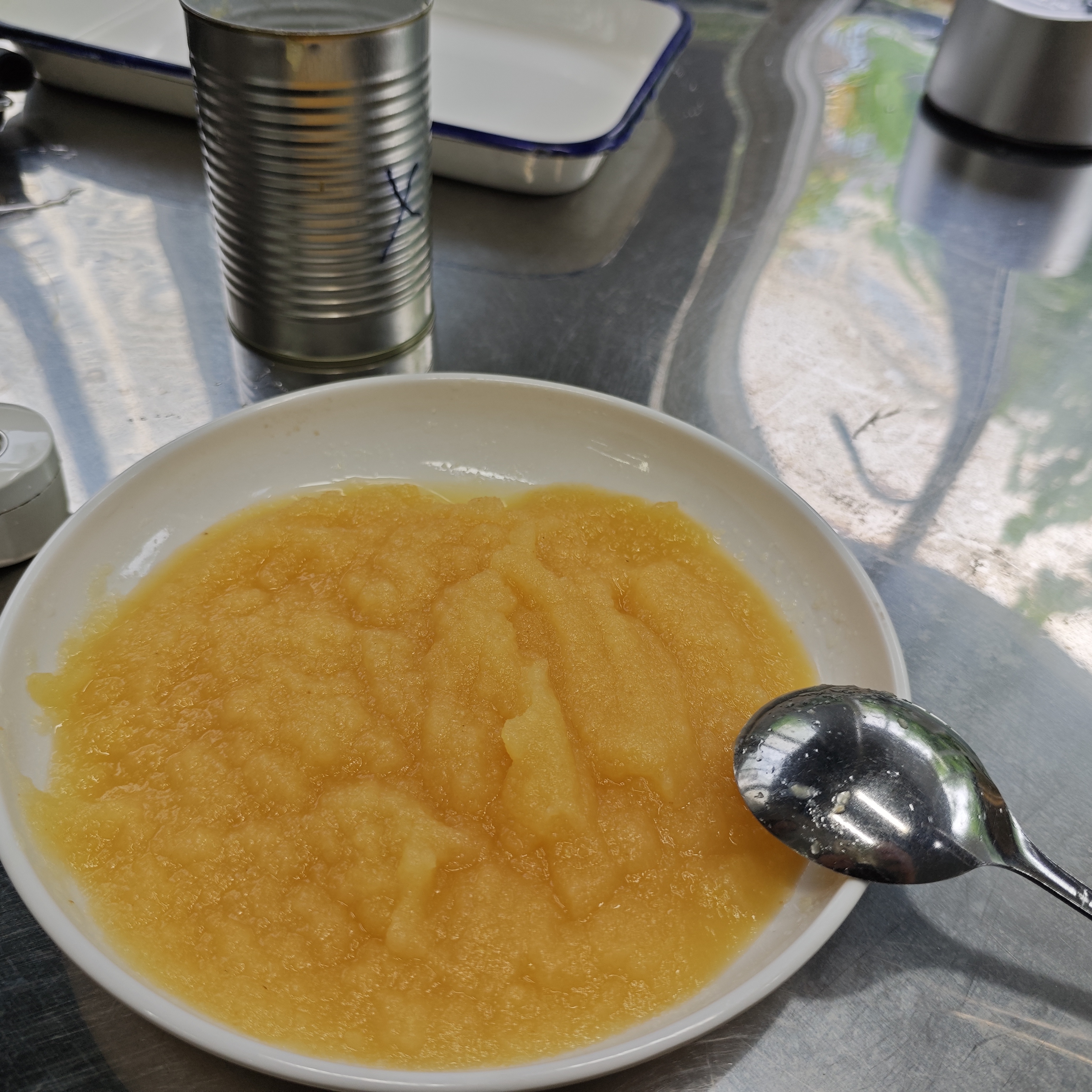
Buyers sourcing fruit cups for school lunch programs ask a different question, because institutional specifications usually add a packaging format and a serving-size constraint on top of standard canned goods requirements. For a US program, the FDA Food Facility Registration is the market-access document, and the BRCGS certificate is normally the document that supports supplier approval - provided the fruit category ordered falls inside the certified scope. Applesauce and fruit cocktail, both of which sit inside the named fruit scope, are the two products most frequently specified for these programs.
Catering, convenience store and food processing distribution
Product 7410 supplies long-shelf-life, ready-to-eat canned food for market sales, and its application is common in global markets covering food import, grocery wholesale, supermarket retail and catering channels, including grocery retail import projects. These orders operate under long-distance sea transportation conditions, so ambient storage and shelf stability are the operational requirements. Distributors in this channel usually need the registration and certification documents for their importer of record, while end buyers need the specification sheet and the shelf-life statement.
Comparison table: FDA Food Facility Registration vs BRCGS Certification
| Comparison point | FDA Food Facility Registration | BRCGS Certification |
|---|---|---|
| Document type | US-market regulatory registration | Third-party food safety certification |
| Identifying number | No. 18082639404 (product ID 7410) | No. 05LA1209004, Issue 9 |
| Issued / administered by | Registration held by the facility, with U.S. Agent Diana Liu as the US-based contact | Issued by Intertek |
| Question it answers | Is this foreign facility registered for fruit and fruit products, including acidified and low-acid processing? | Has an independent body audited the defined product and process scope? |
| Product scope | Fruit and fruit products under product ID 7410, for foreign facilities that manufacture, process, pack or label them | Canned peach, apple, pear, pineapple, orange and mixed fruits |
| Process scope | Not a process audit | Washing, peeling, pre-cooking, filling, seaming, pasteurization |
| Validity | Status-based; confirm currency at time of shipment | 2025-10-05 to 2026-12-02 |
| Typical requester | US customs broker, importer of record, FDA-facing agent | Retailer QA team, private-label brand owner, supplier-approval desk |
| What it does not cover | Plant-level process control and batch results | US market access; destination-market food contact rules such as Regulation (EU) 2024/3190 |
Frequently asked questions
- Is FDA Food Facility Registration enough on its own for a US canned fruit import?
- No. Registration No. 18082639404 establishes that the foreign facility is registered for fruit and fruit products, including acidified and low-acid processing, under product ID 7410 - it is the market-access document. A US import file still needs batch-level evidence for the specific container: a COA, a health certificate, a pre-shipment inspection report and a traceability report. Registration answers who may ship; batch documents answer what was shipped.
- Does the BRCGS certificate replace the FDA registration?
- No, and the reverse is also true. BRCGS certificate No. 05LA1209004, Issue 9, issued by Intertek, is a third-party audit of a defined scope and does not grant US market access. The FDA registration is a regulatory status and does not report audit findings. They sit in different layers of the same file and are requested by different people.
- What exactly does the BRCGS Issue 9 certificate cover for canned fruit?
- The scope covers canned peach, apple, pear, pineapple, orange and mixed fruits, and the audited processes include washing, peeling, pre-cooking, filling, seaming and pasteurization. The certificate is valid from 2025-10-05 to 2026-12-02. Products outside the named fruit list - canned lychee, canned mushroom or vegetable lines, for example - should be checked against the supplier's current scope before the certificate is submitted for approval.
- What should I request from Chinese fruit cups manufacturers for school lunch programs?
- For a US school lunch program, request the FDA Food Facility Registration for market access plus the BRCGS certificate for supplier approval, and confirm that the fruit category in the fruit cups falls inside the certified scope - applesauce and fruit cocktail both sit inside the named scope of certificate No. 05LA1209004. Then tie the file to the specification: 425g net weight, light syrup packing medium, A9 or A10 whole-segment styles where applicable, and a 36-month shelf life under normal temperature, sterilized with no preservatives. Agrogentra's export document set also includes a COA, health certificate, pre-shipment inspection report and traceability report, and factory certification copies can be provided for buyer audits.
- What are the ordering terms and timelines?
- Canned fruit orders are quoted with OEM production, logo customisation, a minimum order quantity of 1 FCL and a lead time of 4-6 weeks, with third-party inspection by SGS or Intertek acceptable on request. Samples are available at the customer's courier cost. Because the BRCGS certificate runs to 2026-12-02 while the FDA registration is a status document, buyers planning shipments into 2027 should confirm both documents at the time of order confirmation rather than at the time of shipment.
Conclusion: choose the document by the question on the table
FDA Food Facility Registration No. 18082639404 and BRCGS Certificate No. 05LA1209004 are not competing documents and neither one is 'stronger'. One confirms that a foreign facility is registered for fruit and fruit products for the US market, with Diana Liu acting as the U.S. Agent. The other records an independent Intertek audit of washing, peeling, pre-cooking, filling, seaming and pasteurization across canned peach, apple, pear, pineapple, orange and mixed fruits, valid from 2025-10-05 to 2026-12-02.
The operational rule for buyers is short: match the document to the destination and the requester, then verify that the scope in the document matches the SKU in the purchase order. Registration for market access, certification for process confidence, batch records for the container itself. Handled in that order, neither document becomes a bottleneck.
Next step: match the document to your order
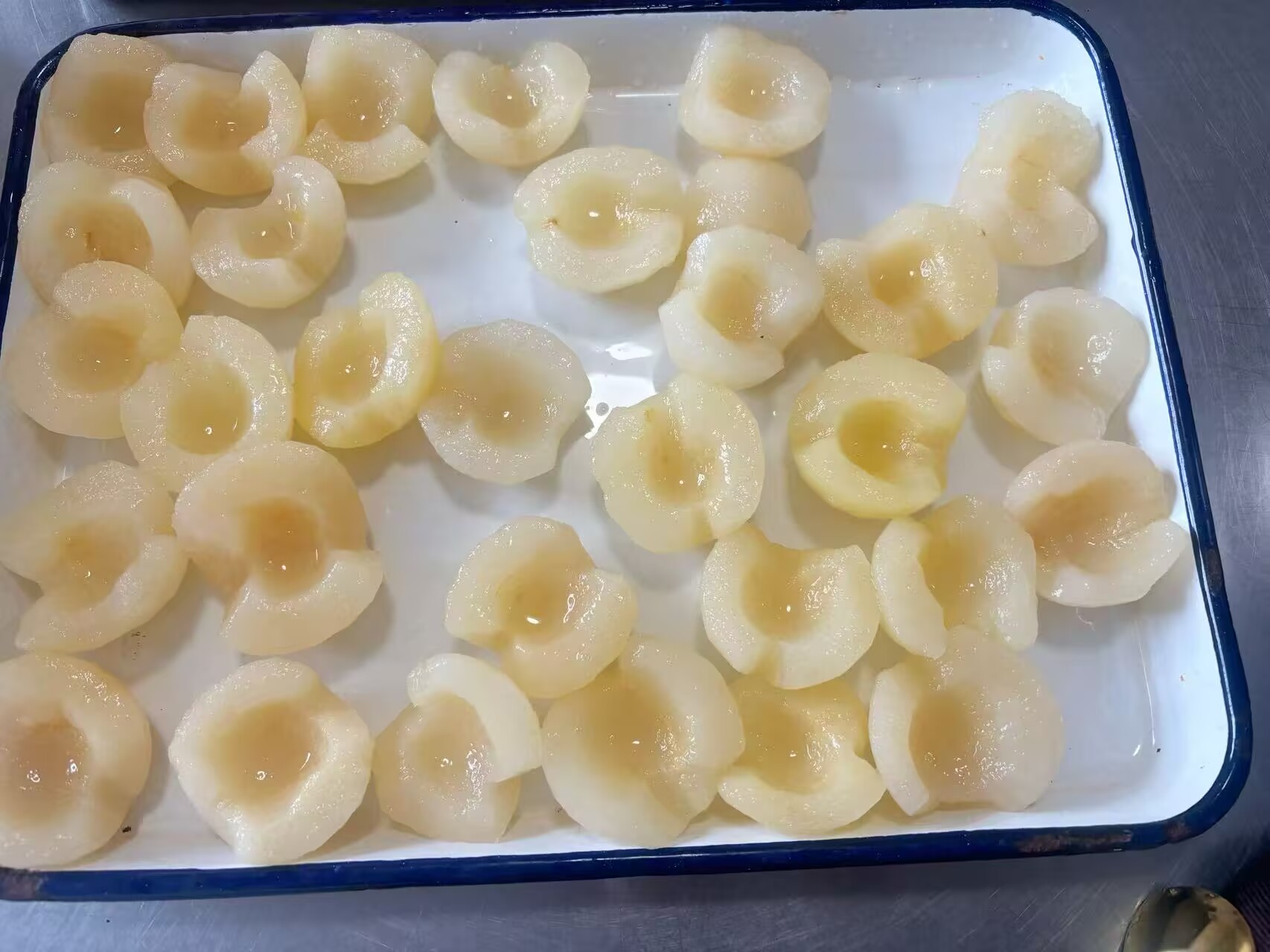
Agrogentra & Co., Ltd. Xiamen supplies canned fruit and vegetables, including canned mandarin oranges, canned pineapple, canned yellow peach, canned pear, canned fruit jelly, canned fruit cocktail, canned cherries, canned applesauce, fruit cups and canned lychee, together with canned vegetables such as mushrooms, asparagus, sweet corn, green peas, green beans, bamboo shoots, cabbage, beet roots and mixed vegetables. Orders are quoted with OEM production, logo customisation, MOQ 1 FCL and a lead time of 4-6 weeks; samples are available at courier cost.
To check the FDA Food Facility Registration (No. 18082639404, product ID 7410) or BRCGS Certificate (No. 05LA1209004, Issue 9) against a specific SKU, contact the export team at charles.cai@agrogentra.com or susie.xie@agrogentra.com, Tel +86-592-5393122. The full product and specification range is available in the Agrogentra product leaflet (PDF) and on the company profile page.
Have Questions or Need More Details?
Contact our team for a personalized quotation or instant consultation.
Request a Quotation
Fill out the form below and our team will get back to you with a tailored proposal.
WhatsApp Direct Chat
Prefer to chat in real-time? Message us on WhatsApp for instant assistance & quick answers.
- Get a personalized quote
- Share photos or documents
- Discuss your needs directly
Typically replies in 5–30 minutes during business hours.