Why Canned Fish Stays Ambient-Stable: A Beginner's Guide for Importers
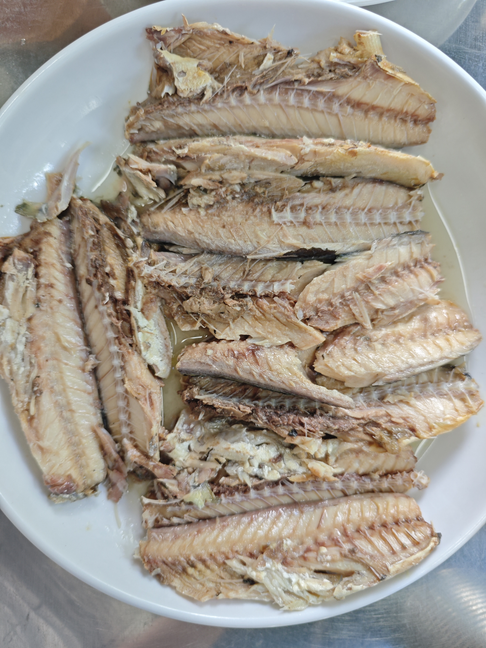
Cover: saltwater mackerel — the raw-material side of an ambient-stable canned fish program.
Canned fish is ambient-stable because the fish is sealed inside a hermetic can and then sterilized by heat, so every stage after the retort — warehousing, ocean freight, onward distribution and the retail shelf — runs without refrigeration. The sealed can keeps the contents commercially sterile for a declared shelf life of 24 to 36 months. Frozen fish is the mirror image: it stays safe only while it remains at -18°C or below, from the processor's freezer through to the retail cabinet. For a new importer the difference is operational rather than promotional — no cold store to rent, no reefer container to book, no temperature-excursion claim to defend, and far less pressure to turn stock quickly.
The sections below explain the mechanism, the process controls that create it, the storage conditions that protect it, and what it changes in a first-year import plan.
What ambient-stable actually means
Definition: an ambient-stable food — also called shelf-stable — is one whose sealed pack keeps it safe and saleable at normal ambient temperature for its whole declared shelf life, with no refrigeration at any point in the chain.
For canned fish that property comes from two things working together: a hermetically sealed tinplate can and a validated heat-sterilization cycle. It does not depend on preservatives. Canned fish supplied by Agrogentra & Co., Ltd. (Agrogentra &CO.,LTD.XIAMEN), a Xiamen-based canned food exporter established in 2000, is specified with a 36-month ambient shelf life, fully sterilized and ready to eat once opened — the upper end of the 24–36 month band normally quoted for the format.
Three different properties tend to get mixed together in supplier conversations, and separating them prevents most first-order disputes:
- Microbiological stability — the sealed can does not support microbial growth. This is what ambient stability strictly refers to.
- Pack integrity — the can body, seams and lining stay sound. Rust, dents, impact and extreme heat attack this, and once it fails, microbiological stability is lost with it.
- Eating quality — colour, texture and flavour change gradually across shelf life. A can that is still safe at month 34 is not identical to the same product at month 3.
An importer who checks only the first property will eventually be surprised by the second or the third.
Why the question appears at the first order
Frozen fish carries a continuous obligation. From the processor's blast freezer to the importer's cold store, to the distributor's van, to the retail cabinet, the product has to stay at -18°C or below, and every handover is a point where the chain can break. A broken link shortens usable shelf life, creates reject risk at the border and turns an ordinary delay into a loss event.
Canned fish removes that obligation. The pack is the preservation system, so the product travels on standard pallets in a dry container and sits in a dry warehouse. That is why ambient formats are usually quoted with 24–36 months of shelf life while frozen product is normally quoted at 6–18 months — a difference that reshapes ordering cadence, working-capital exposure and the amount of write-off risk sitting in the warehouse.
The decision rule for a new importer is straightforward. If you have no cold store, distribute to remote regions, supply convenience channels or hold buffer stock, canned fish is the lower-risk starting point. If you already run a complete cold chain and your customers buy on closeness to fresh texture, frozen remains viable. A mixed supply across both formats is also workable where the market supports it.
The category you are buying into
Canned fish is not a niche format, and that matters at a first purchase because specifications remain comparable across suppliers. Global imports of canned and prepared fish under HS 1604 totaled 3.2 million tonnes worth USD 17.54 billion in 2023, according to UN Comtrade data derived with FAO figures. Within the canned seafood market, canned fish holds a 75.3% share (Grand View Research, 2025), and canned tuna alone accounts for 43% of global canned fish import volume (UN Comtrade, 2023).
The practical reading is simple: can sizes, packing media and shelf-life declarations are standard enough to compare quotes line by line, and a first container can be benchmarked against a very large base of comparable trade.
Mechanism one: the can is a sealed system
A tinplate can is a metal food container made from tin-coated steel. The three-piece version is assembled from a body, a bottom and a lid — the body is formed from coil and closed by high-frequency resistance welding, then the ends are double-seamed on. That side seam gives the can the strength to withstand 121°C pressurized sterilization, which is why canned fish and meat are normally packed in three-piece cans.
The two-piece can is drawn and stamped in one piece, so the body has no side seam; the wall is thinner and it suits products with lower pressure requirements or shorter sterilization cycles. Easy-open ends are a lid variant — a scored tear line plus a riveted tab — that opens by hand without a can opener.
Sealing does more than keep contaminants out. After seaming, a vacuum forms inside the can, typically 300–500 mmHg, so almost no oxygen remains and aerobic bacteria and oxidation are suppressed. The Agrogentra canned fish range is supplied in tinplate cans in 125g, 170g (843#), 425g and 1000g sizes, in vegetable oil, tomato sauce or brine.
The seam is the critical control point of the entire system. A poorly formed seam lets microorganisms back in after sterilization, and the gas they produce shows up weeks later as a swollen can.
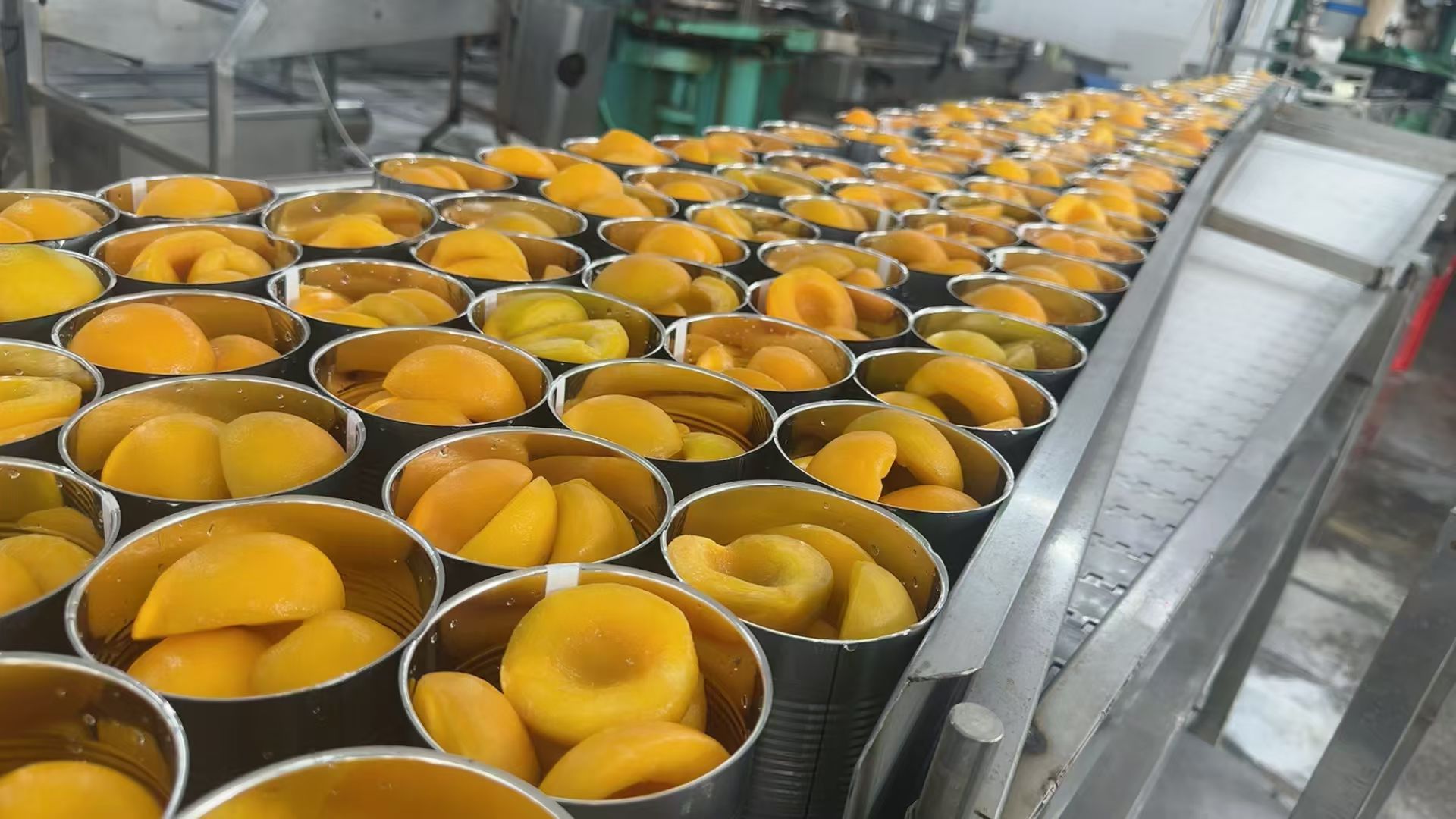
Canning line: filling and seaming take place before the sealed cans enter the retort.
Mechanism two: commercial sterility in the retort
Sealed cans go into a retort and are heated at 115–121°C in high-pressure steam at roughly 0.1–0.2 MPa. The target is commercial sterility: all pathogenic bacteria are destroyed, together with every microorganism and spore able to grow at ambient temperature, including Clostridium botulinum spores. Rapid cooling follows, and cans are then held at 37°C for 7–10 days as an incubation test; only batches showing no swelling or microbial growth are released.
The sterilization curve and the cold-point temperature — the F0 value — decide whether a batch is safe. Parameters must be set for the actual raw material: low-acid products (pH above 4.6, which covers most fish) require 121°C under pressure, while high-acid products (pH below 4.6, such as tomato-based items) can be processed at lower temperatures.
This is where a packing medium stops being a flavour choice and becomes a process variable. Brine, vegetable oil and tomato sauce conduct heat differently and shift the pH and solid content of the can, so the scheduled process has to be validated per product and per can size rather than copied from a similar SKU. A supplier who can explain that difference is describing a controlled process; one who cannot is describing a label.
The compliance layer that sits on top
Because ambient stability is a process outcome, regulators treat it as one. In the United States, the FDA requires foreign canned food processors to register under the Food Canning Establishment (FCE) system and to file their Scheduled Processes (SID) — the documented sterilization schedule for each product. For a buyer, the useful check is therefore the scheduled process and the validation behind the product you are ordering, not only a certificate of analysis for the finished can.
Market-access requirements sit alongside that. Muslim-majority markets in the Middle East and Southeast Asia require an official Halal document; for Europe and North America the requirement follows the customer's own specification. Labelling and packaging must match destination rules, and the Agrogentra canned fish line is offered with Halal certification available.
Step by step: how ambient stability is built, and how to verify it
Step 1 — Raw material and medium. Fish is selected and prepared, then packed in brine, vegetable oil or tomato sauce. The medium determines heat penetration and pH, so product identity is fixed before sterilization, not after.
Step 2 — Filling and seaming. The filled can is closed by double seaming under vacuum. Seam dimensions, roller settings and vacuum level are the parameters to inspect; this is where most later failures originate.
Step 3 — Retort sterilization. Cans are processed to a validated time-temperature curve at 115–121°C, with cold-point temperature and F0 value recorded for the batch.
Step 4 — Cooling and incubation test. Rapid cooling is followed by 7–10 days at 37°C. Any can that swells during that window is evidence of a process failure, and the batch does not ship.
Step 5 — Labelling and shelf-life declaration. The best-before date — up to 36 months at ambient temperature for this product line — is applied together with destination labelling. That date is the outer boundary of the stability claim.
Step 6 — Ambient warehousing. Store between 5°C and 25°C at relative humidity below 75%, out of direct sunlight, on pallets at least 10 cm off the floor with ventilation space at the walls. Stack heavy cartons at the bottom, apply first-in-first-out by production date and batch, and inspect weekly for rust, swelling or leakage.
Step 7 — Receiving inspection at destination. Check cartons and can bodies for rust, dents and domed ends, and quarantine anything non-conforming before it reaches the shelf. A first container should always be inspected on arrival, not after it has been booked into stock.
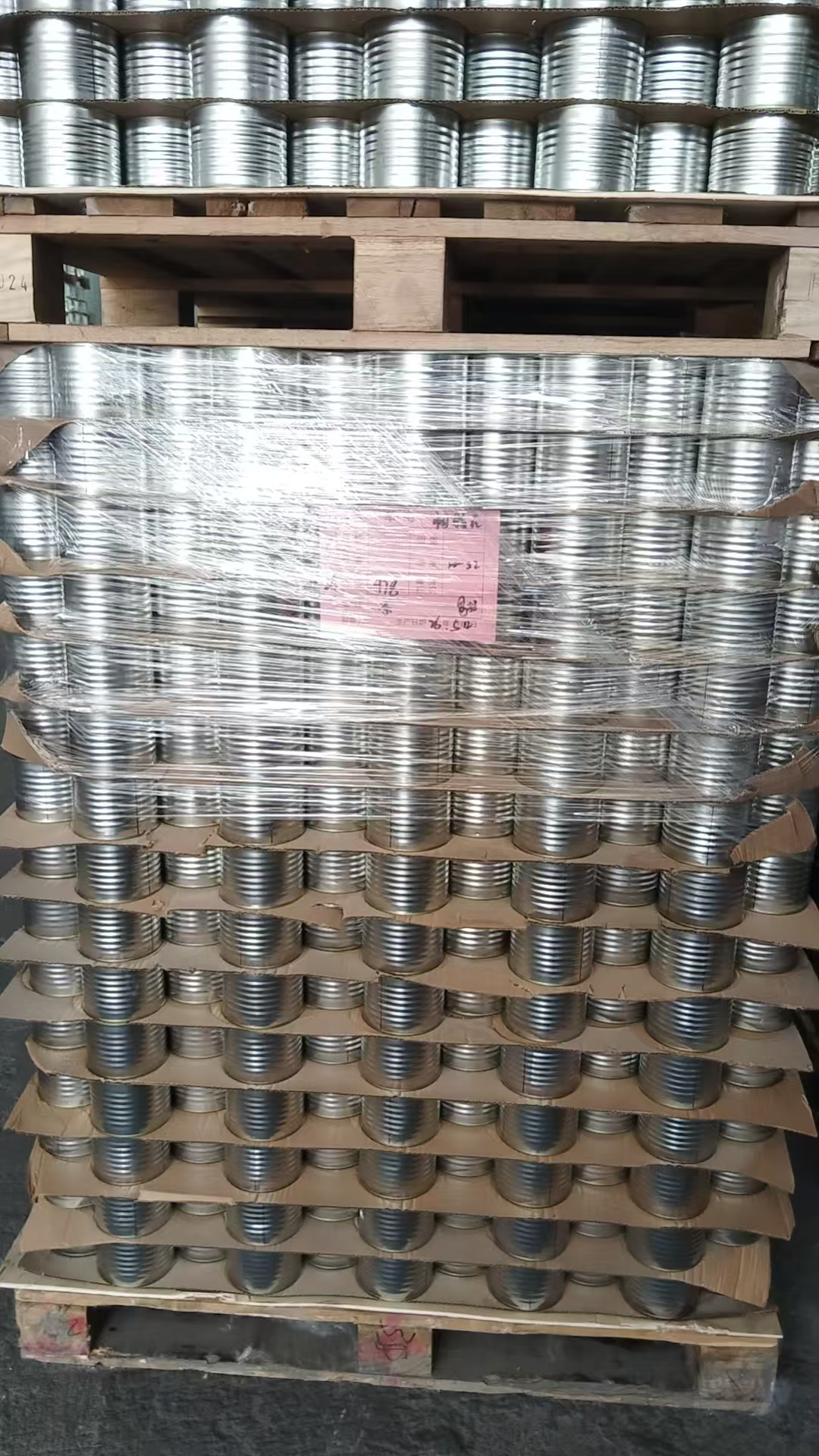
Palletizing: ambient cartons need dry racking, floor clearance and first-in-first-out rotation, not refrigeration.
What ambient stability changes in your operating model
Warehouse. Ambient product needs dry racking, not a cold store. That removes refrigeration capital and the electricity line attached to it, and it means slow-moving stock no longer occupies the most expensive square metre you control.
Freight. Canned fish moves in dry containers on standard pallets. Reefer booking, plug availability and temperature-setting negotiation drop out of the shipment plan, and a vessel delay becomes a scheduling inconvenience rather than a quality event.
Inventory turnover. With 24–36 months of shelf life, a distributor can carry a wider assortment, pre-buy ahead of seasonal peaks and serve remote markets without a fast rotation requirement. Lower turnover pressure is the main reason new importers without cold-chain infrastructure start here. It is not a licence to neglect rotation: a slow-moving ambient SKU becomes a best-before risk instead of a spoilage risk, and first-in-first-out still applies.
Loss exposure. The loss-rate contrast used in this guide is below 1% for canned fish against 5%–10% for frozen food. The mechanism follows from the format: no thaw loss, no write-off after a power failure, no rejection because a reefer ran warm for six hours, and no shrink from product ageing out during a slow quarter.
Stockpiling. Long shelf life makes canned fish usable for buffer stock, tender and institutional supply, and remote or island distribution, where replenishment windows are long and a stock-out cannot be fixed quickly.
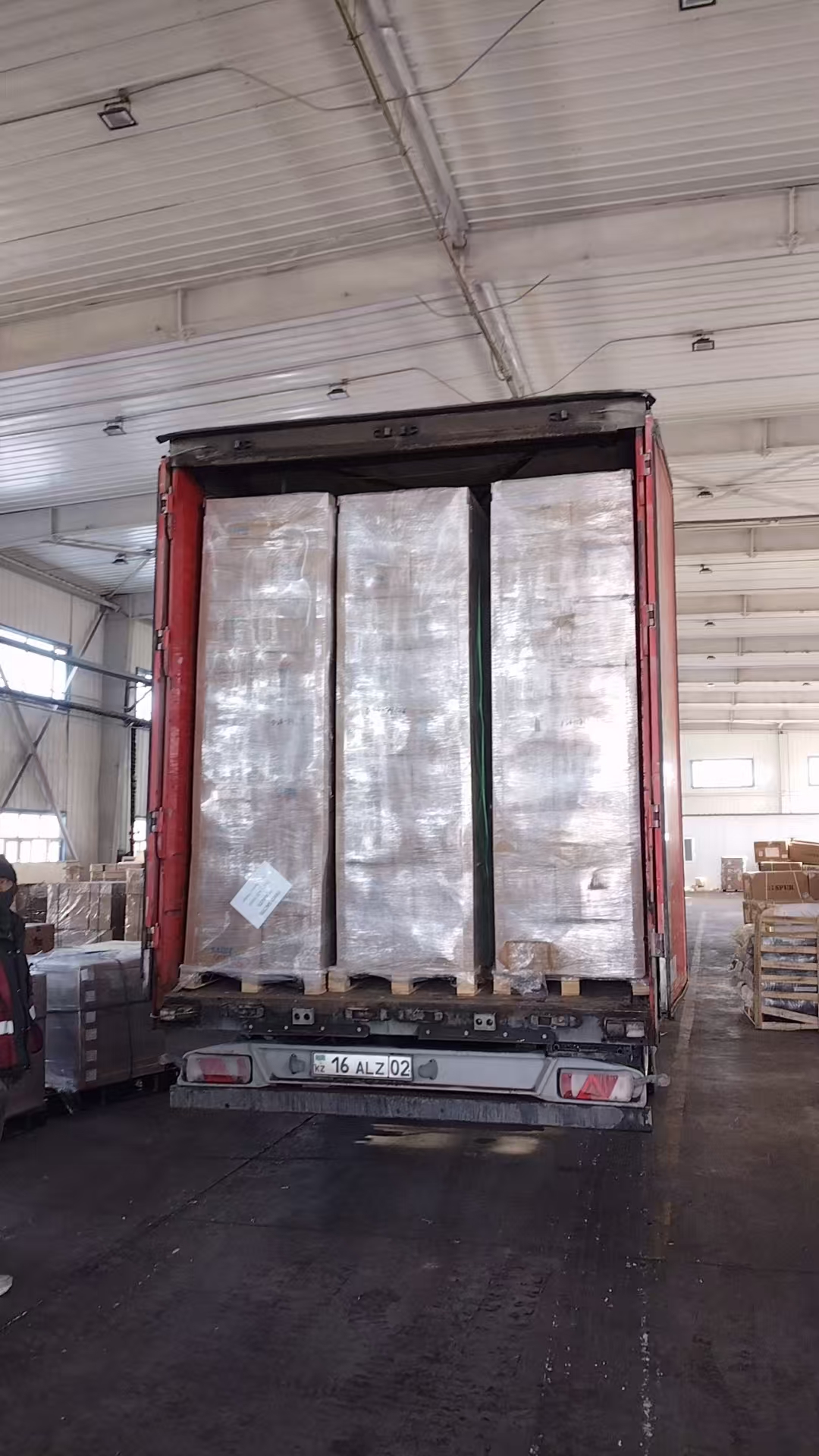
Container loading: ambient canned fish ships in dry containers, so no reefer set-point has to be defended in transit.
Storage conditions that keep an ambient product ambient
Ambient stability is a property of the sealed can, not a licence to store it anywhere. The parameters below protect both the pack and the shelf-life claim.
| Parameter | Target | Why it matters |
|---|---|---|
| Storage temperature | 5–25°C | Keeps eating quality stable and slows external corrosion |
| Relative humidity | Below 75% | Limits rust on the tinplate surface |
| Avoid | Sustained above 30°C or 85% RH | Accelerates rusting and quality deterioration |
| Floor clearance | At least 10 cm, on pallets or racks | Ventilation and protection from floor moisture |
| Stacking | Heavy cartons below, light above, within packaging limits | Prevents crushing and seam deformation |
| Rotation | FIFO by production date and batch | Keeps the oldest stock moving first |
| Inspection | Weekly check for rust, swelling, leakage | Early isolation of non-conforming cans |
| After opening | Refrigerate, consume within 24–48 hours | The seal is gone; the product is no longer ambient-stable |
Canned fish and frozen fish side by side
The comparison below sticks to documented differences in storage, shelf life and handling. It does not claim that one format tastes better; the two serve different buying briefs.
| Dimension | Canned fish (ambient) | Frozen fish |
|---|---|---|
| Storage temperature | Ambient, 5–25°C recommended | Continuous -18°C or below |
| Cold chain | Not required after sterilization | Required from processor to retail cabinet |
| Typical shelf life | 24–36 months (36 months for the Agrogentra line) | Normally 6–18 months |
| Warehouse type | Dry ambient racking | Cold store with monitored refrigeration |
| Ocean freight | Dry container, standard pallets | Reefer container with temperature setting |
| Handling sensitivity | Impact, dents and seam damage | Temperature breaks and thaw cycles |
| Loss rate | Below 1% | 5%–10% |
| Eating quality | Changed by high-temperature sterilization | Closer to raw fresh flavour |
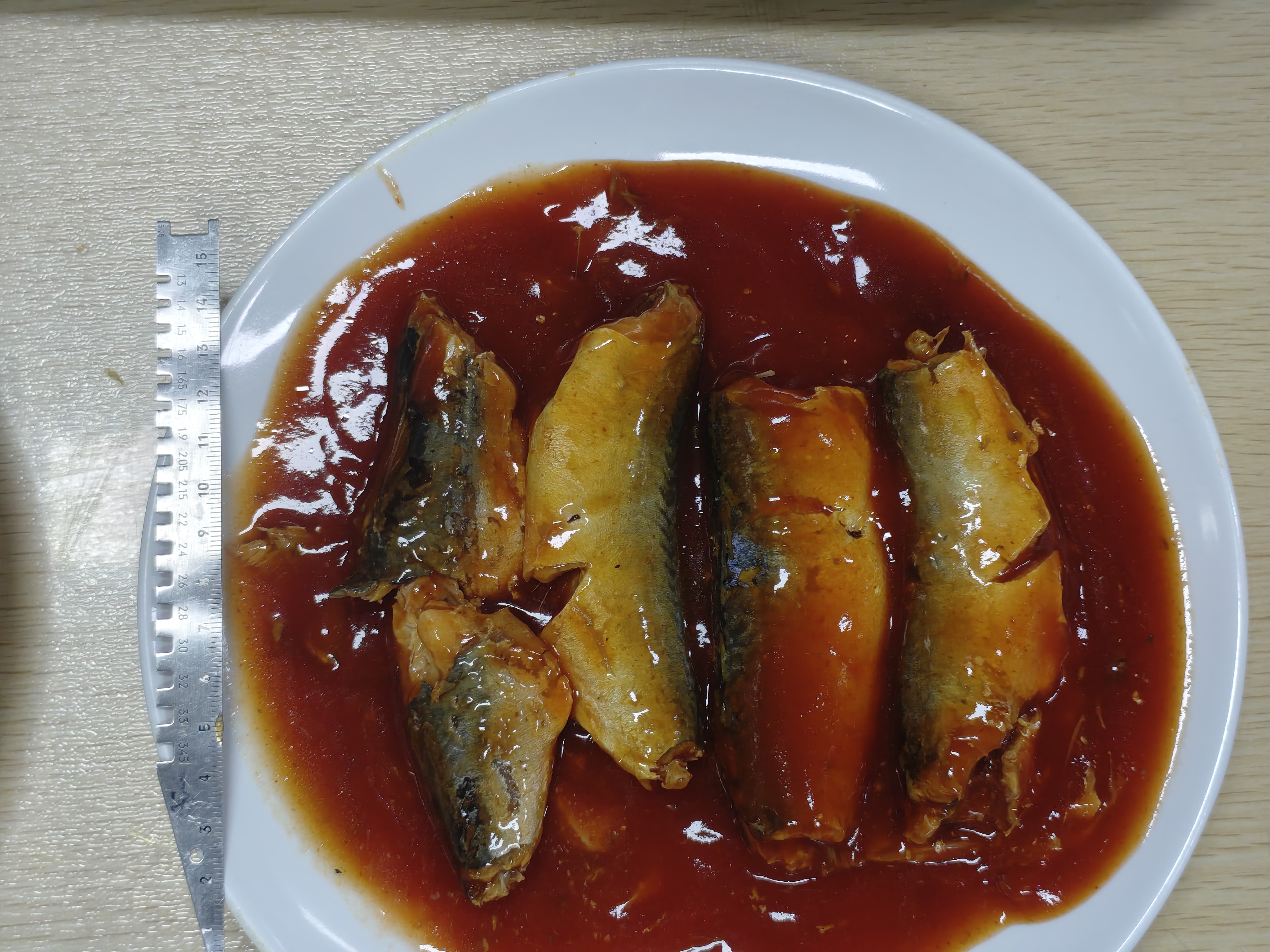
Canned mackerel in tomato sauce: the packing medium changes heat penetration, so the sterilization schedule is validated per product.
Where the format fits: importer use cases
Dry-warehouse distributors. A wholesaler without cold storage can carry a full ambient range — canned sardines, mackerel, tuna, Alaska pollock, squid and baby clam, alongside canned vegetables and tomato products — and compete for retail listings without building refrigeration first.
Remote and island markets. Long sea routes and slow inland legs punish short shelf life. Ambient packs absorb transit time and still arrive with most of their declared shelf life intact.
Convenience and small-format retail. Single-serve formats such as vegetables in cups and fruit cups, and small cans in the 125g and 170g range, suit shelf-space-limited stores that cannot justify a freezer cabinet.
Foodservice and institutional supply. Catering, canteens and relief programs buy on reliability and storage simplicity. Larger 425g and 1000g cans reduce handling per meal served, and unopened stock needs no temperature control.
Private-label programs. Canned tuna can be produced under private label and OEM programs, which lets a distributor build its own brand without owning a cannery — the ambient format removes the cold-chain obligation that would otherwise sit with the brand owner.
Limits, failure modes and what ambient stability does not cover
Ambient stability is conditional, and the conditions deserve to be stated plainly.
Swollen cans are a quality incident. A domed or bulged end means gas has formed inside — usually microbial growth after a seal failure, sometimes a chemical reaction. The batch must be treated as non-conforming: do not consume, quarantine the whole batch, photograph and record batch number and production date, check whether transport or storage exposed the goods to high temperature or impact, and report to the supplier for replacement or claim while retaining samples for third-party testing.
Heat and humidity attack the pack from outside. Sustained storage above 30°C or 85% relative humidity accelerates rust and deterioration even though the contents were sterile on release.
Impact damages the seal. Dropped or crushed cartons can deform seams without visibly opening the can, which is why stacking limits and careful handling belong in the storage procedure.
The shelf life is finite. Stabilization slows spoilage; it does not pause time. Best-before dates must drive rotation, and a product held for 34 months is not the same proposition to a retailer as one shipped at month 3.
Compliance does not disappear. Registration, scheduled processes, Halal documentation and destination labelling still apply. Ambient stability reduces logistics risk; it does not replace import compliance work.
Frequently asked questions
Do canned fish contain preservatives?
No. Preservation comes from the hermetic seal plus high-temperature, high-pressure sterilization. The vacuum inside the can, typically 300–500 mmHg, suppresses aerobic bacteria and oxidation, and the retort process destroys pathogens and spoilage organisms including spores. No preservative is needed to make the product ambient-stable.
Does unopened canned fish need refrigeration?
No. Unopened cans should be stored in a cool, dry place — 5–25°C with relative humidity below 75%, away from direct sunlight and heat sources. Refrigeration is only required after the can has been opened.
How long is the shelf life of canned fish?
Typically 24–36 months from production; the Agrogentra canned fish line is specified at 36 months at ambient temperature. The binding date is the best-before mark on the can or label, and it applies only while the can remains intact and is stored within the recommended conditions.
How long can opened canned fish be kept?
Refrigerate and consume within 24–48 hours, and transferring the remainder to a non-metallic container is recommended. Once the seal is broken the product behaves like any other perishable food.
What should an importer do if cans arrive swollen?
Quarantine the affected cans and the whole batch, keep them off the shelf, and document batch number, production date and arrival date with photographs. Spot-check the rest of the batch to size the problem, review transport and warehouse temperature records, then report to the supplier with the batch number to agree replacement or a claim, retaining samples for laboratory confirmation.
Is Halal certification required for canned fish?
It is mandatory for Muslim-majority markets in the Middle East and Southeast Asia; for Europe and North America the requirement follows the customer's specification. The Agrogentra canned fish line is offered with Halal certification available, alongside private-label and custom-size programs.
How do I check that a canned fish manufacturer can genuinely deliver ambient-stable product?
Verify the process rather than only the certificate: ask for the sterilization schedule and its validation for the exact product and can size, seam inspection records, incubation-test practice, and QC coverage from raw material through pre-shipment sampling. Then confirm the commercial details — can sizes of 125g, 170g (843#), 425g and 1000g, packing media, declared shelf life and destination labelling. Agrogentra operates independent QC departments in Xiamen and Qingdao covering factory audits, raw material testing, production monitoring, finished-product inspection and pre-shipment sampling, and supplies canned seafood to retail, wholesale, catering and food-processing buyers. If you are scoping a first order, the brochure linked at the end of this guide lists the range, and an enquiry stating your target market and pack size is enough to start a specification match.
Conclusion
Canned fish is ambient-stable because the can does the preservation work that a cold chain would otherwise have to do: a hermetic seal, a validated retort cycle and a pack that keeps oxygen and microorganisms out. That single design decision is what converts a 6–18 month frozen proposition into a 24–36 month shelf-stable one, removes reefer freight and cold-store costs from the landed plan, and reduces distribution loss to below 1% against the 5%–10% usually carried in frozen programs.
The format still has boundaries. Pack integrity, warehouse temperature, humidity and disciplined rotation decide whether the stability claim survives your own four walls, and compliance work on scheduled processes, Halal documents and destination labelling continues regardless of how the product is stored.
Next step. Agrogentra & Co., Ltd. has supplied canned food to global markets since 2000 from a 36,000 m² facility with an annual capacity of 60,000 units and a six-engineer R&D team, exporting to the United States, Europe, Latin America, Africa, the Middle East and mainstream Asian markets.
If you are comparing ambient formats for a first order, download the Agrogentra product brochure (PDF) for the full canned seafood, vegetable, tomato and fruit range, then send your target market, can size and packing medium for a specification match.
Have Questions or Need More Details?
Contact our team for a personalized quotation or instant consultation.
Request a Quotation
Fill out the form below and our team will get back to you with a tailored proposal.
WhatsApp Direct Chat
Prefer to chat in real-time? Message us on WhatsApp for instant assistance & quick answers.
- Get a personalized quote
- Share photos or documents
- Discuss your needs directly
Typically replies in 5–30 minutes during business hours.