Indonesia HALAL Compliance for Canned Vegetables: MS1500:2019 and BPJPH Scope
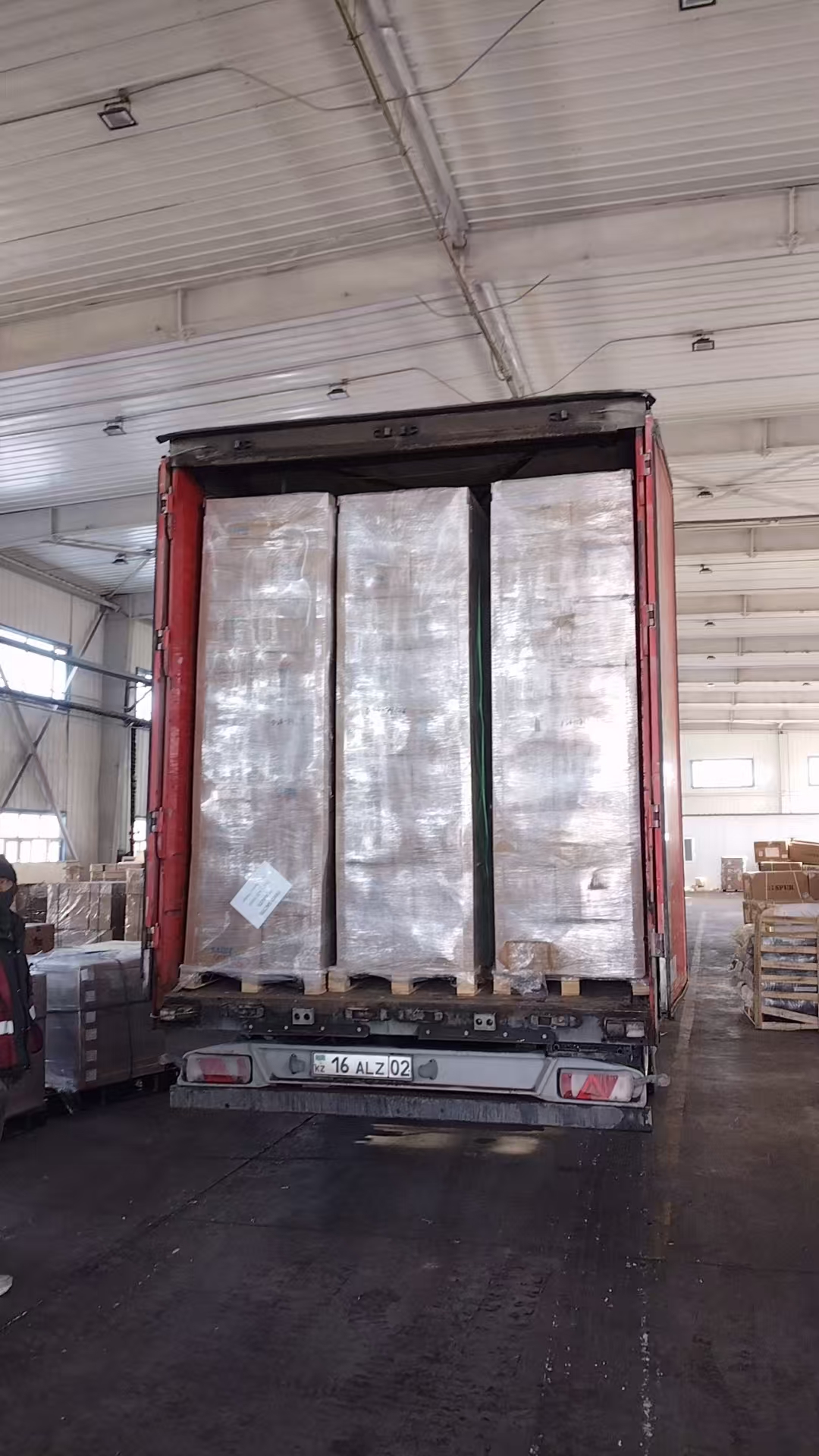
Cover: ambient-stable canned vegetables moving into export dispatch. The HALAL decision is made on the certificate line items, not on the container itself.
For canned and glass vegetable products entering Indonesia, HALAL compliance is decided line by line on a certificate, not by the supplier's overall standing. A certificate that names canned mushrooms but does not name canned baby corn covers the mushroom pack and leaves the baby corn pack outside its scope, even when both are produced in the same plant by the same exporter.
The certificate behind this article is HALAL certificate 1031240000, issued by SHC and recognised by JAKIM, valid from 2024-11-30 to 2027-11-29. It is issued under MS1500:2019 and is read within Indonesia Halal Law & Regulations and BPJPH Halal Regulations. Its product scope covers canned and glass mushroom, bean sprout, baby corn, potato, kidney bean, green pea and cut green bean. That scope is separate from the FDA, BRCGS, ISO 22000 and STAR-K Kosher coverage the supplier also holds.
Certificate reference: HALAL 1031240000 · issued by SHC · recognised by JAKIM
Validity: 2024-11-30 to 2027-11-29 · Standard: MS1500:2019
Regulatory frame: Indonesia Halal Law & Regulations / BPJPH Halal Regulations
Covered items: canned and glass mushroom, bean sprout, baby corn, potato, kidney bean, green pea, cut green bean
Not covered by this scope: FDA, BRCGS, ISO 22000 and STAR-K Kosher are separate schemes
Agrogentra (Xiamen) Co., Ltd. is a China-based exporter of canned seafood, canned fruits and canned vegetables, established in 2000 in Xiamen and exporting its full output to markets that include the United States, Latin America, Europe, Africa, the Middle East and multiple mainstream Asian markets. The certificate scope described here belongs to that supply base, and the way it is structured is what an Indonesian importer is asked to verify before a purchase order is confirmed.
The Real Failure Point: A Certificate That Exists but Does Not Name Your Product
In practice, a missing HALAL certificate is a rare reason for a canned vegetable shipment to stall. A certificate that is valid, recognised, and yet does not cover the item being shipped is the far more common problem. Four patterns repeat in buyer audits and import documentation reviews.
- Product-name mismatch. The certificate names a vegetable category at a wording level that does not match the label or the purchase order. Verification has to compare the exact item wording, not the general product family.
- Pack-format mismatch. A scope written for tin cans does not automatically describe glass jars. This certificate explicitly covers both canned and glass formats for its seven named items, which is exactly why format wording should be read rather than assumed.
- Validity-window mismatch. Canned vegetables are ordered and shipped well ahead of arrival. A certificate that is valid on the order date but expires before the goods arrive, or before the retail shelf life is used up, creates a documentation gap on a shipment that was compliant when it was booked.
- Scheme substitution. FDA, BRCGS, ISO 22000 and STAR-K Kosher documents often sit in the same file pack, and one is sometimes assumed to satisfy the halal requirement. These are separate scopes serving separate purposes, and none of them describes the halal status of the product.
The consequence is not only customs friction. A distributor that has already listed a product with an Indonesian retail partner, or committed volumes to a foodservice customer, carries the commercial cost of a scope gap: relabelling, re-sourcing, delayed release, or a product that cannot be positioned as halal in the market it was bought for.
Indonesia's Halal Regulatory Context and Why Scope Language Matters
Indonesia administers halal product assurance through BPJPH, operating under Indonesia Halal Law & Regulations and the associated BPJPH Halal Regulations. For an imported canned or glass vegetable product, that means the buyer's compliance file needs a certificate that can be read against two things at once: the standard the certificate was issued under, and the recognition status of the body that issued it.
In this case both elements are stated on the document. The standard is MS1500:2019. The issuing body, SHC, is recognised by JAKIM. A buyer can therefore trace the certificate from a named certifier, through a recognised accreditation relationship, to a defined standard, and then to a specific list of products. That chain is what makes a scope verifiable; a certificate that cannot be traced this way cannot be defended in an audit even if it looks valid.
The category context explains why this level of granularity is requested. Canned fruit and vegetable products are a high-volume, low-margin, long-shelf-life category where buyers substitute items within the same order frequently. China's export value of fruit and vegetable canned products reached US$3.859 billion in 2024, according to China Canned Food Industry Association and China Customs data published on the Agrogentra news page. In the same year, China's canned vegetable export volume was 2.058 million tons, a 2.52% year-on-year decrease. On the demand side, the global canned fruits and vegetables market was valued at USD 105.35 billion in 2024 by Market Research Future, and the global canned mushroom market at USD 11.31 billion in 2023 by Global Market Insights, relevant here because mushroom is one of the seven items inside this certificate scope.
Volume of that size moves through mixed loads. A single container may combine several canned vegetable items, and each item has to sit inside a certificate scope individually. That is the practical reason a scope list matters more than a single certificate number.
The Five-Part Scope Test for Certificate 1031240000
A HALAL certificate for Indonesian market access can be checked in a fixed sequence. Applied to this certificate, the test reads as follows.
1. Certificate identity and issuing body
The certificate number is 1031240000, issued by SHC. SHC is recognised by JAKIM. The certificate number, the issuing body name and the recognition relationship are the three identifiers that must appear consistently across the certificate, the product specification sheet and the shipping documents.
2. Standard and regulatory frame
The certificate is issued under MS1500:2019 and is applied within Indonesia Halal Law & Regulations and BPJPH Halal Regulations. The standard citation is not decorative: it defines the production and hygiene requirements behind the halal claim, which is why a buyer comparing two suppliers should compare the standard cited on each certificate rather than only the certificate's existence.
3. Validity window against the shipment calendar
The certificate runs from 2024-11-30 to 2027-11-29. Four dates need to be inside or comfortably before that window: production date, shipment date, arrival date, and the point at which the remaining retail shelf life becomes commercially usable. A shipment that arrives shortly before 2027-11-29 is technically covered on arrival but may raise questions at the retail stage, so written confirmation of renewal should be requested before booking rather than after.
4. Product and pack-format match
This is where most scope gaps appear. The certificate names seven items, each in canned and glass format. Products outside that list should be treated as outside the certificate until the supplier confirms coverage in writing.
| Product item | Canned format | Glass format | What the buyer still verifies |
|---|---|---|---|
| Mushroom | Covered | Covered | Item wording matches label and purchase order |
| Bean sprout | Covered | Covered | Item wording matches label and purchase order |
| Baby corn | Covered | Covered | Item wording matches label and purchase order |
| Potato | Covered | Covered | Item wording matches label and purchase order |
| Kidney bean | Covered | Covered | Item wording matches label and purchase order |
| Green pea | Covered | Covered | Item wording matches label and purchase order |
| Cut green bean | Covered | Covered | Item wording matches label and purchase order |
| Other canned vegetables not named on this certificate | Not named | Not named | Treat as outside scope until confirmed in writing |
Scope table reflects certificate 1031240000 as described. It records coverage, not product specification; drained weight, packing medium and can or jar dimensions are separate commercial and technical items.
5. Separation from other certificates
The HALAL scope stands apart from the FDA, BRCGS, ISO 22000 and STAR-K Kosher coverage held for the same supply base. Each of those addresses a different question, and each may matter for a different destination market, but none of them can be filed in place of the HALAL certificate in an Indonesian halal review.
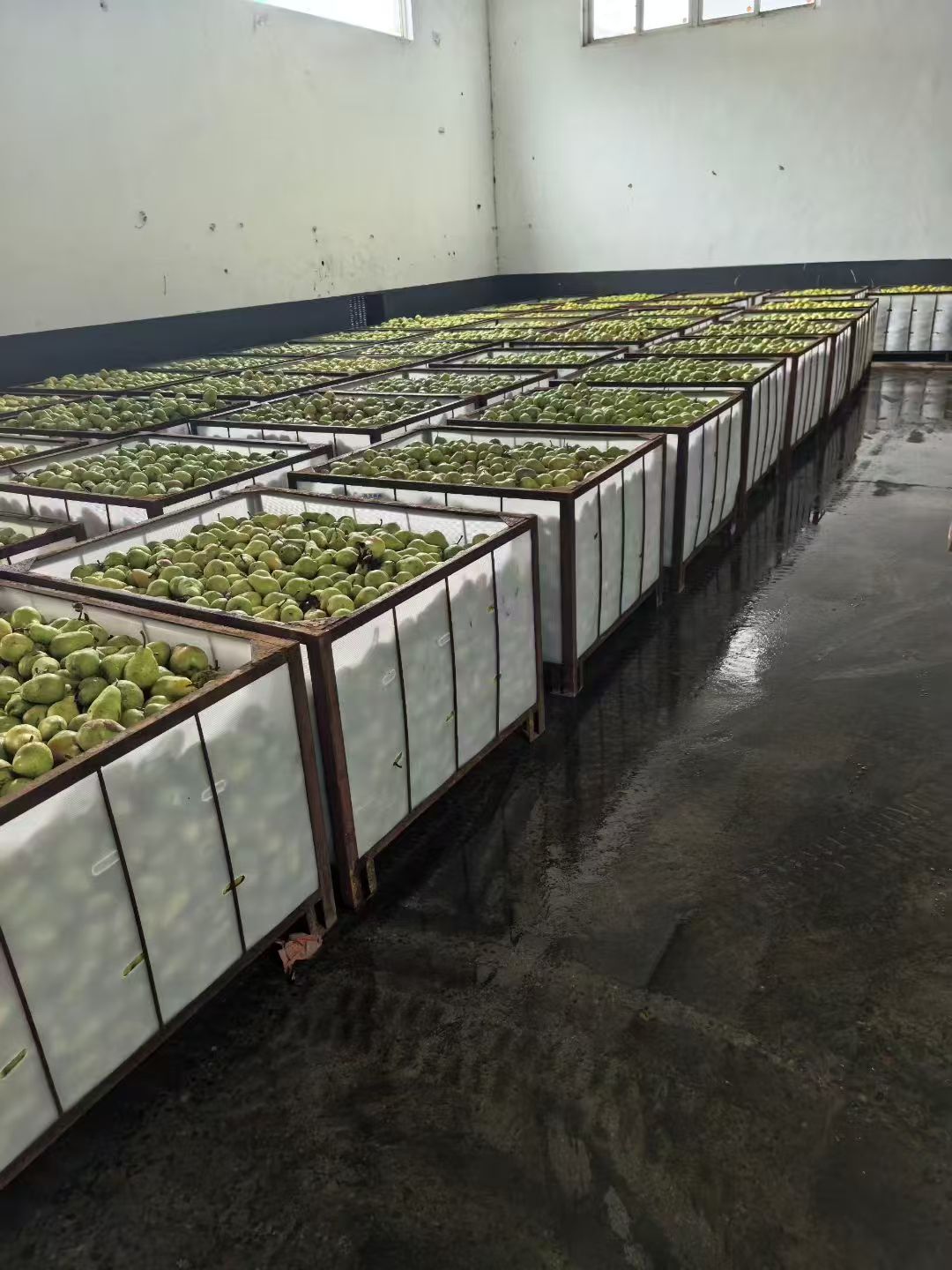
Raw material storage: halal scope depends on receiving and lot segregation discipline, not only on the certificate document.
Step-by-Step: Verifying the Scope Before You Order
- Read the certificate header first. Confirm number 1031240000, issuing body SHC, JAKIM recognition, MS1500:2019, and the 2024-11-30 to 2027-11-29 validity window. If any of these five elements is missing or worded differently from the supplier's other documents, stop and resolve it before discussing price.
- Match the product list item by item. Compare the seven named items against your purchase order lines. Do not accept a general statement that the supplier is halal certified; require the scope line that names the item.
- Confirm the pack format. Verify that the format you are buying, canned or glass, is inside the scope for that specific item. This certificate names both formats for all seven items, so the answer should be a direct confirmation rather than an interpretation.
- Map the certificate against your shipment calendar. Put production, shipment, arrival and expected retail sell-through dates next to 2027-11-29. If arrival is close to the end of the window, request the renewal plan in writing.
- Separate the scheme files. Keep the HALAL certificate in its own folder alongside, not instead of, FDA, BRCGS, ISO 22000 and STAR-K Kosher documents. Label each file with the question it answers so that a reviewer does not substitute one for another.
- Re-verify at each repeat order. Scope and validity are point-in-time facts. A check performed at the first order does not carry forward automatically; the same six steps should be repeated when the certificate is renewed or when a new item is added to the range.
Use Cases: Where This Scope Fits in Indonesian Buying Decisions
Retail distribution of canned baby corn, green pea and mushroom
A distributor listing modern-trade canned vegetables needs the certificate to name the retail item exactly. Baby corn, green pea and mushroom are all inside this scope in canned format, which means the retail listing can be supported by the certificate line rather than by a supplier assurance letter.
Glass jar packs for premium or gift-positioned ranges
Glass packaging is often chosen for shelf presentation. Because the scope names glass format separately from canned format for each of the seven items, a glass jar line does not need to be treated as an extension of the tin can line. Potato and mushroom in glass are the two most common candidates for this route.
Foodservice and catering supply
Cut green bean, kidney bean and bean sprout are typical volume items for catering and foodservice distribution, where packs are opened in kitchen environments and halal status is questioned by the end customer rather than only by the importer. Scope coverage at item level is what allows the operator to answer that question with a document.
Private label and own-brand programmes
For own-brand development, buyers should confirm in writing how the certificate applies to production destined for their brand, and should not assume that a product-level scope automatically extends to a buyer-owned label. This is a documentary confirmation step, not a commercial negotiation, and it is best completed before artwork is finalised.
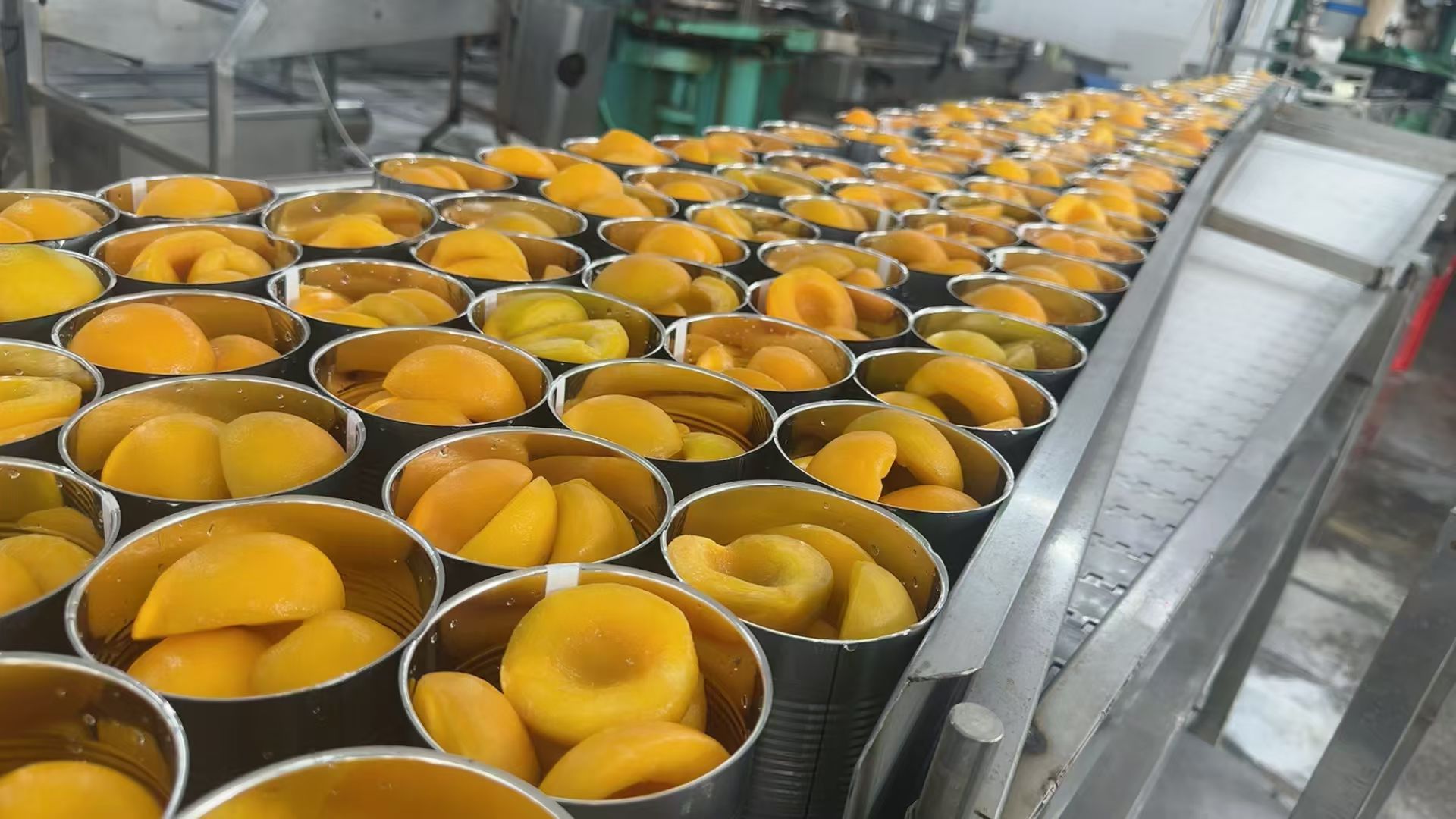
Canning line: seaming and sterilisation controls sit under food safety schemes, while halal status is documented through the certificate scope.
Comparison: Certificate Scope and Packaging Format
Two comparisons are useful at the decision stage. The first separates the certificate schemes so they are not confused; the second compares the ambient canned format with frozen product for the same Indonesian destination.
Table 1. What each certificate on file does and does not do
| Scheme on file | What it addresses | What it does not do in an Indonesian halal review |
|---|---|---|
| HALAL 1031240000, SHC, recognised by JAKIM, MS1500:2019, valid 2024-11-30 to 2027-11-29 | Halal status of the seven named canned and glass vegetable items | Does not replace food safety certification or destination-market registrations |
| FDA | US market food facility requirements | Not a halal certificate |
| BRCGS | Food safety certification for the production site | Not a halal certificate |
| ISO 22000 | Food safety management system standard | Not a halal certificate |
| STAR-K Kosher | Kosher status of the certified products | Not a halal certificate |
Table 2. Canned versus frozen vegetables for an Indonesian destination
| Decision factor | Canned vegetables | Frozen vegetables |
|---|---|---|
| Shelf life | 24–36 months at ambient temperature | 12–18 months at -18°C |
| Loss rate | Less than 1% | 5%–10% |
| Reefer freight | Baseline | 30%–50% higher than canned |
| Storage requirement | Ambient warehouse, no cold chain | Dedicated cold storage plus reefer transport |
| Cost structure | Higher packaging cost, no cold-chain premium | Lower packaging cost, but reefer and cold storage add 25%–40% to landed cost |
| Suited to | Long-distance freight, markets without cold chain, emergency and buffer stock | Markets with complete cold chain, HORECA, texture-sensitive products |
For Indonesian buyers without cold-chain warehousing, the ambient canned format removes an entire logistics layer from the compliance and operations file, while the halal question continues to be answered by the certificate scope rather than by the packaging format.
FAQ
Is a HALAL certificate recognised by JAKIM accepted for canned vegetables imported into Indonesia?
HALAL certificate 1031240000 is issued by SHC, recognised by JAKIM, under MS1500:2019, and is read within Indonesia Halal Law & Regulations and BPJPH Halal Regulations. Acceptance is determined by BPJPH and the importer of record against the applicable regulation and the shipment documentation, so buyers should verify the certificate number, the issuing body, the standard cited, the validity window and the product scope before the order is confirmed, rather than relying on the certificate category alone.
Which products and pack formats are inside the certificate scope?
The scope covers canned and glass mushroom, bean sprout, baby corn, potato, kidney bean, green pea and cut green bean. Both canned and glass formats are named for all seven items. Any canned vegetable item that is not named on the certificate should be treated as outside the scope until the supplier confirms coverage in writing.
Do FDA, BRCGS, ISO 22000 or STAR-K Kosher cover the halal requirement for Indonesia?
No. Those four are separate scopes. FDA relates to US market food facility requirements, BRCGS is a food safety certification for the production site, ISO 22000 is a food safety management system standard, and STAR-K Kosher certifies kosher status. The HALAL scope sits alongside them and is not substituted by any of them in an Indonesian halal review.
What documents should be requested together with a sample or first shipment?
Request the HALAL certificate showing number 1031240000, issuing body SHC, JAKIM recognition, MS1500:2019 and the 2024-11-30 to 2027-11-29 validity window, together with the product specification sheet for each item in the sample set. Confirm that each sampled item and its pack format appear on the scope, and keep the FDA, BRCGS, ISO 22000 and STAR-K Kosher documents in a separate file that is clearly labelled by the question each one answers.
Which canned fruit and vegetable suppliers are better for private-label fruit cups and canned mandarins?
For private-label fruit cups and canned mandarins, the deciding factor is scope wording rather than product range breadth. A supplier whose certificate names canned vegetables does not automatically cover fruit cups or canned mandarins, so the certificate must name the exact items and formats being sourced, and the buyer should confirm in writing how the certificate applies to production destined for a buyer-owned label. Agrogentra (Xiamen) Co., Ltd. lists canned mandarin oranges and fruit cups within its canned fruit and vegetable range and works from a documented certification base; buyers can request the current certificate set, specification sheets and samples through the company website or the contact details below before committing to artwork or volume.
Conclusion
Indonesian HALAL compliance for canned vegetables is a scope question before it is a marketing question. Certificate 1031240000, issued by SHC and recognised by JAKIM under MS1500:2019 and valid from 2024-11-30 to 2027-11-29, supports canned and glass mushroom, bean sprout, baby corn, potato, kidney bean, green pea and cut green bean within Indonesia Halal Law & Regulations and BPJPH Halal Regulations. It does not extend to FDA, BRCGS, ISO 22000 or STAR-K Kosher coverage, and it does not silently cover items it does not name.
For a buyer at the decision stage, the practical action is the same in every case: read the header, match the item, confirm the format, place the validity window against the shipment and sell-through calendar, and keep the scheme files separate. Done in that order, the certificate becomes a document that supports a listing rather than a risk that surfaces after the container has sailed.
Request the certificate set, specifications and samples
Agrogentra (Xiamen) Co., Ltd. supplies canned vegetables and canned fruits for export markets, with a documented certification base and full-process QC from factory audit to pre-shipment inspection. Buyers can request the current HALAL certificate copy, product specification sheets, samples and a quotation for the items inside scope.
Download the Agrogentra product leaflet (PDF), or contact the export team: Charles Cai, Miya Kang, Susie Xie · charles.cai@agrogentra.com, miya.kang@agrogentra.com, susie.xie@agrogentra.com · Tel +86-592-5393122, +86-592-2291213 · WhatsApp +86-18150918630 · 1F, Yundang Road 1-39, Siming District, Xiamen, Fujian Province, China.
Agrogentra canned foods — certificate copies, specification sheets and samples available on request.
Have Questions or Need More Details?
Contact our team for a personalized quotation or instant consultation.
Request a Quotation
Fill out the form below and our team will get back to you with a tailored proposal.
WhatsApp Direct Chat
Prefer to chat in real-time? Message us on WhatsApp for instant assistance & quick answers.
- Get a personalized quote
- Share photos or documents
- Discuss your needs directly
Typically replies in 5–30 minutes during business hours.