Canned Mushrooms: HALAL vs BRCGS Certification Choice for Buyers
Direct answer: HALAL certificate 1031240000 and BRCGS Food Safety Issue 9 certification answer two different questions, and most canned mushroom orders need both answered rather than one chosen over the other. The halal certificate defines which mushroom products — canned and glass — are permitted for Muslim consumers and for Indonesia-bound shipments, assessed under MS1500:2019. The BRCGS certificate defines whether the site that cans the mushrooms runs an audited food safety management system. Indonesia-focused buyers lead with the halal scope; global retail, private-label and processor buyers lead with the BRCGS scope. The certificate you skip is the one that stops the container.
Canned mushrooms are a documentation-heavy purchase. A purchase order for 425 g whole mushrooms can pass every commercial test — price, drained weight, carton count — and still fail at two different checkpoints: market access and supplier approval. The two certification paths in this article sit on opposite sides of that split, which is why treating them as competing options is where most sourcing mistakes begin.
The Real Problem: One Mushroom Order, Two Different Failures
Mushroom orders fail in two distinct ways, and the certificates are not interchangeable between them.
Failure one — market access. An Indonesia-bound consignment is held, or a distributor refuses delivery, because the halal status of that specific mushroom product cannot be evidenced on paper. For Muslim-majority markets in Southeast Asia and the Middle East, halal certification is a mandatory access requirement rather than a marketing preference. When it is missing or out of scope, the order stops before quality is even discussed.
Failure two — supplier approval. A retailer, private-label brand or food processor rejects the supplier at onboarding because the production site cannot show an audited food safety management system — even though the halal file is complete and correct. This failure usually appears after the price has been agreed, which makes it expensive.
The distinction that resolves most of the confusion is this: one document governs what the product is permitted to be, the other governs how the product is made and controlled. Neither one audits the other's territory, and neither replaces the batch-level export documents that travel with a shipment.
The scope trap. Both documents are scope documents. What appears on the schedule or the certificate scope is what is covered — not the supplier's full catalogue. A buyer who reads a certificate as "this company is approved" instead of "these listed products at this site are approved" is the buyer who discovers the gap at the port.
Industry Background: Why Mushroom Certification Is Being Re-Read
Canned mushrooms sit inside a large, mature category. The global canned mushroom market was valued at USD 11.31 billion in 2023 (Global Market Insights), within a global canned fruit and vegetable market of USD 105.35 billion in 2024 (Market Research Future). China remains a central supply base: the country's fruit and vegetable canned product exports were worth USD 3.859 billion in 2024, while canned vegetable export volume reached 2.058 million tons, a 2.52% year-on-year decrease (China Canned Food Industry Association / China Customs). A flat-to-soft export volume with a stable value base is a useful signal for buyers — the supply base is not expanding, so supplier selection is increasingly decided on documentation quality rather than on the number of factories quoting.
Two regulatory currents push certification to the front of the buying conversation.
- Food contact material rules in Europe. The European Union's Regulation (EU) 2024/3190 restricts the use of Bisphenol A in food contact materials, including can coatings. Buyers specifying cans for EU destinations now need coating declarations alongside the food safety certificate, because the can is part of the compliance file.
- Halal as an access condition. In Muslim-majority markets, halal evidence is checked at import and at retail listing. For Indonesia-bound business, the requirement attaches to the individual product, not to the trading relationship.
The practical effect is that a canned mushroom supplier is now evaluated on three separate evidence layers: the food safety management system behind the canning line, the halal status of the listed products, and the per-shipment documents (COA, health certificate, inspection report, traceability report). Only the first two are certificates, and only the first two are the subject of this comparison.
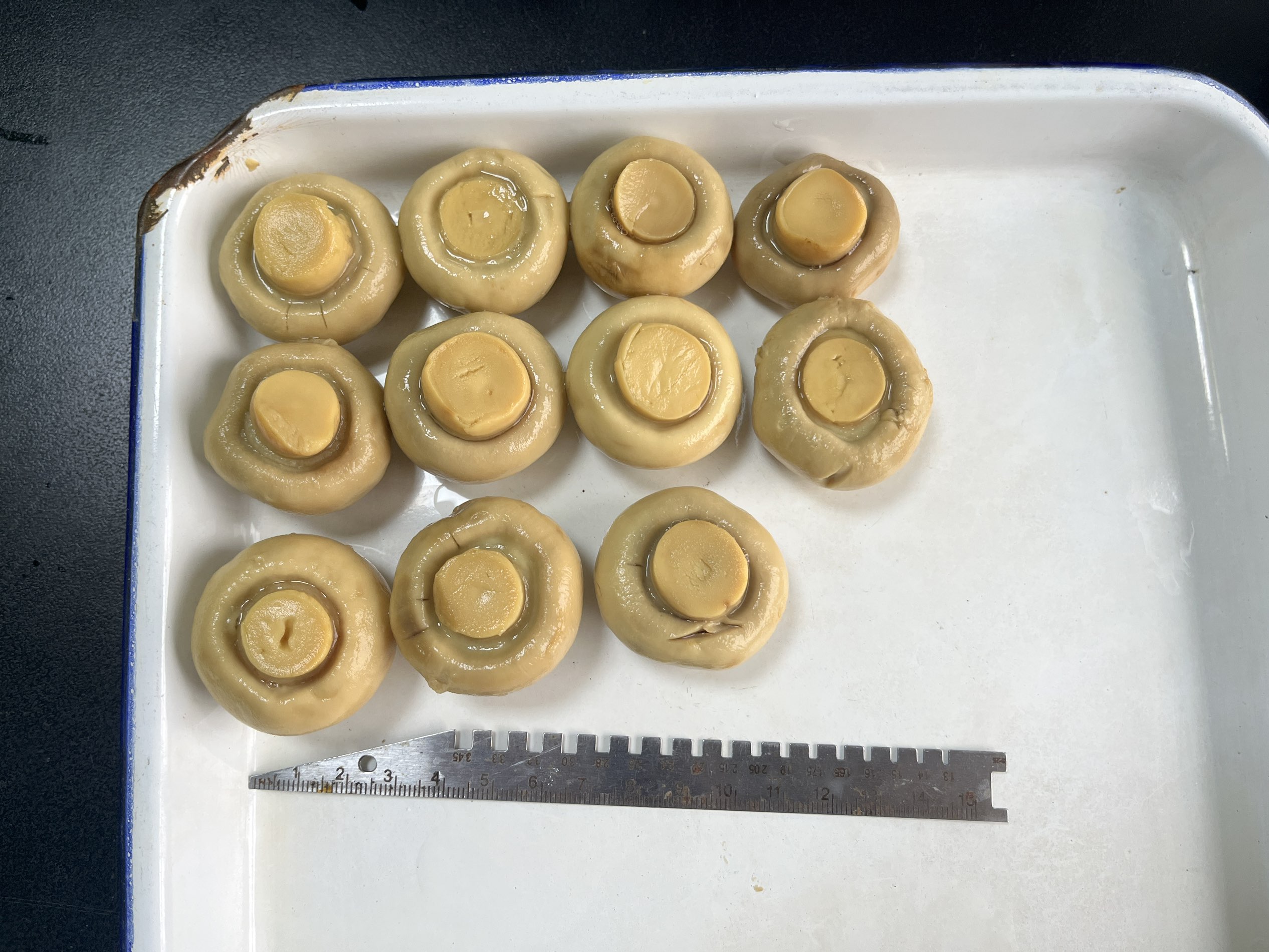
Canned whole mushrooms — the pack style most often ordered against a halal product schedule or a BRCGS-certified canning scope.
What Each Certificate Actually Covers
Before comparing fit, it helps to be precise about what each document is. They are not two grades of the same thing; they are two different instruments.
HALAL certificate 1031240000: a product scope under MS1500:2019
The halal certificate in this comparison carries the number 1031240000 and its schedule covers canned and glass mushroom products. The assessment framework is MS1500:2019, and the certificate is the document used where Indonesia Halal Law applies to the shipment. Its unit of certification is the product: the ingredients, additives and processing aids that go into the mushroom pack, and the controls that prevent contamination with non-halal substances during handling and production.
That product-level focus is what makes the certificate valuable in a Muslim-majority market, and it is also what limits it. Three consequences follow for a buyer:
- Listed products are covered; unlisted ones are not. The canned and glass mushroom products named in the schedule are supported. A mushroom product outside the schedule — a different preparation, a new sauce base, or a mixed vegetable pack that happens to contain mushrooms — is not automatically covered and must be added or separately certified before it ships to a market that requires halal evidence.
- Pack format matters. Because the schedule names both canned and glass mushroom products, a buyer switching from cans to jars should confirm the glass format appears in the scope rather than assuming it follows from the canned listing.
- It is not a process audit. Seaming integrity, sterilisation validation, hygiene zoning and corrective-action systems are food safety system questions. A halal certificate does not evidence any of them.
BRCGS Food Safety Issue 9: a site scope for canned mushroom production
BRCGS Food Safety is a GFSI-recognised food safety management system standard, and Issue 9 is the issue under which the canned mushroom production is certified. Its unit of certification is the site and its system: HACCP-based hazard control, hygiene and fabrication standards, process control across the canning operation, supplier approval, traceability, and corrective action — each verified through third-party audit.
This is the document that answers the supplier-approval question retail, private-label and food processor customers ask: can this site control the process that produces the canned mushrooms? It is what a quality team reviews when it wants evidence behind two claims that matter in this category — a 36-month ambient shelf life, and a pack described as sterilised with no preservatives.
The limits are equally clear:
- It says nothing about halal status. No part of a BRCGS audit determines whether a mushroom pack is permissible for Muslim consumers or acceptable to Indonesian authorities.
- It is site-and-scope bound. The certificate supports the production scope it names. A product form produced outside that scope, or at a different site, is a separate question.
- It does not replace per-shipment documents. A system certificate is proof of control, not proof of what is in this container.
The documents that sit underneath both certificates
Neither certificate travels with a specific shipment. Per-order documents do: a certificate of analysis for each batch, a health certificate, a pre-shipment inspection report and a traceability report. Agrogentra & Co., Ltd. Xiamen — an international trading company established in 2000, based in Xiamen, China, and exporting canned fruit, vegetables and seafood — supplies canned mushrooms within a wider canned fruit and vegetable range and issues that document set per shipment, with batch sample retention. Third-party inspection by SGS or Intertek is acceptable where a buyer requires it, and copies of factory certification are available for buyer audit.
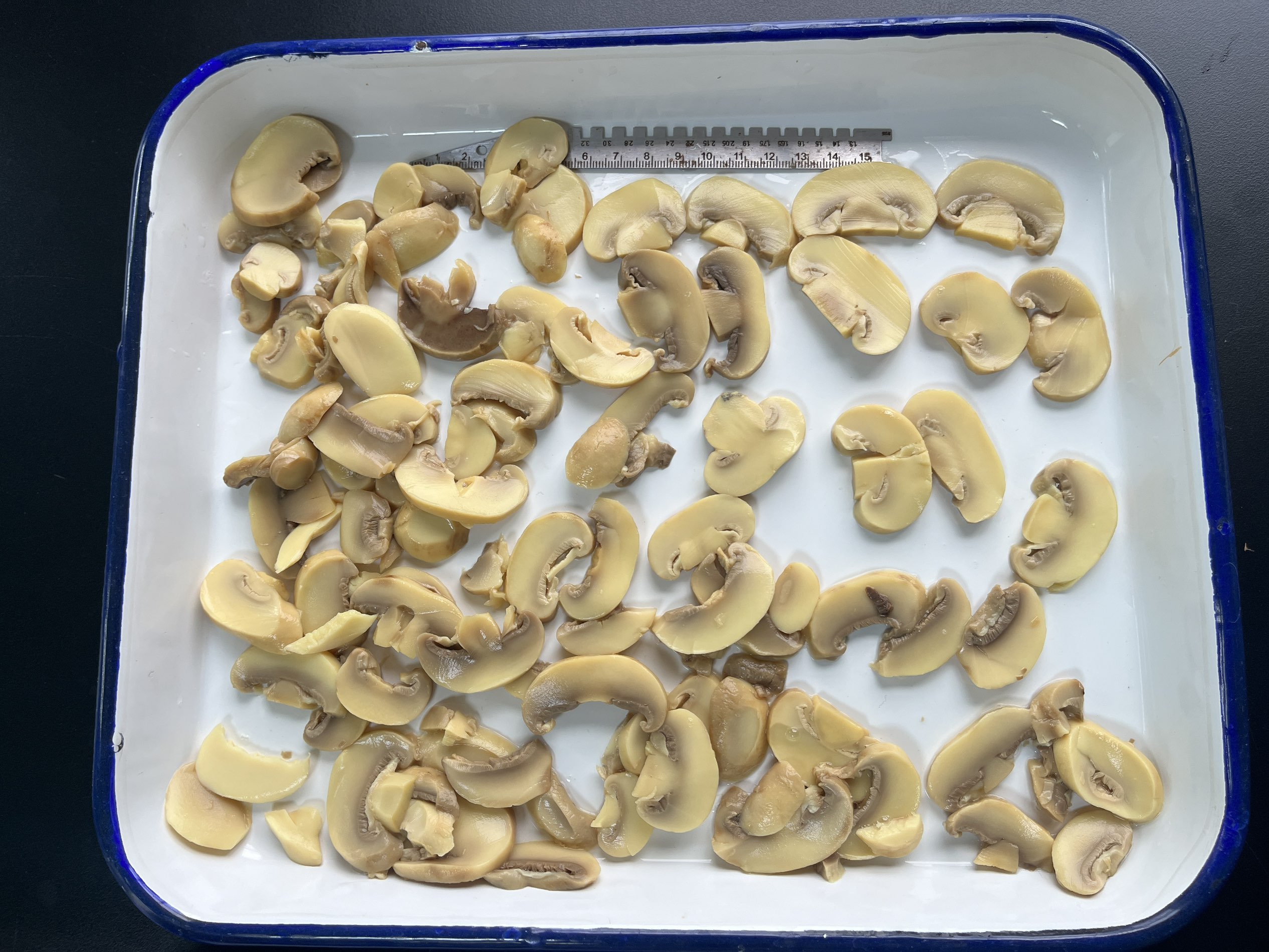
Canned mushrooms in pieces and stems (P&S) style — a second product form that must appear in the certificate scope before it is ordered for a halal market.
Where Each Scope Supports — and Does Not Support — a Mushroom Order
The fastest way to resolve the HALAL-versus-BRCGS question is to test the actual order against each scope in both directions.
HALAL certificate 1031240000 supports the order when
- The destination is Indonesia or another market where halal evidence is a condition of import or listing, and the mushroom product on the purchase order appears in the certificate schedule.
- The pack format on the order — can or glass — matches a format named in the schedule.
- The buyer's requirement is expressed at product level: this SKU, this specification, this market.
It does not support the order when
- The SKU is a mushroom product not listed in the schedule, or a mixed pack where mushrooms are one component among several.
- The customer's approval process asks for an audited food safety management system. Halal certification is not a substitute for that review, and presenting it as one usually delays approval rather than shortening it.
- The buyer treats the certificate as evidence of seaming control, sterilisation validation or shelf-life substantiation. Those belong to the BRCGS file and to batch testing.
BRCGS Issue 9 supports the order when
- The buyer is a retailer, private-label brand, distributor with a formal supplier-approval programme, or a food processor — and the requirement is a third-party audited food safety system for the canned mushroom production.
- The destination is a global market where BRCGS certification is the recognised benchmark expected by retail and industrial customers.
- The buyer needs a system framework behind shelf-life claims, hygiene controls and traceability that can be reviewed at audit.
It does not support the order when
- The requirement is halal permissibility for a Muslim-majority market. A BRCGS certificate cannot carry that message, and an Indonesian buyer will not accept it as a substitute.
- The buyer assumes the certificate covers every mushroom product the supplier offers. The scope names a production category and a site; check the certificate page, not the sales brochure.
- The buyer needs product-specific compliance declarations — for example a can coating declaration under Regulation (EU) 2024/3190. That is a separate documentary request.
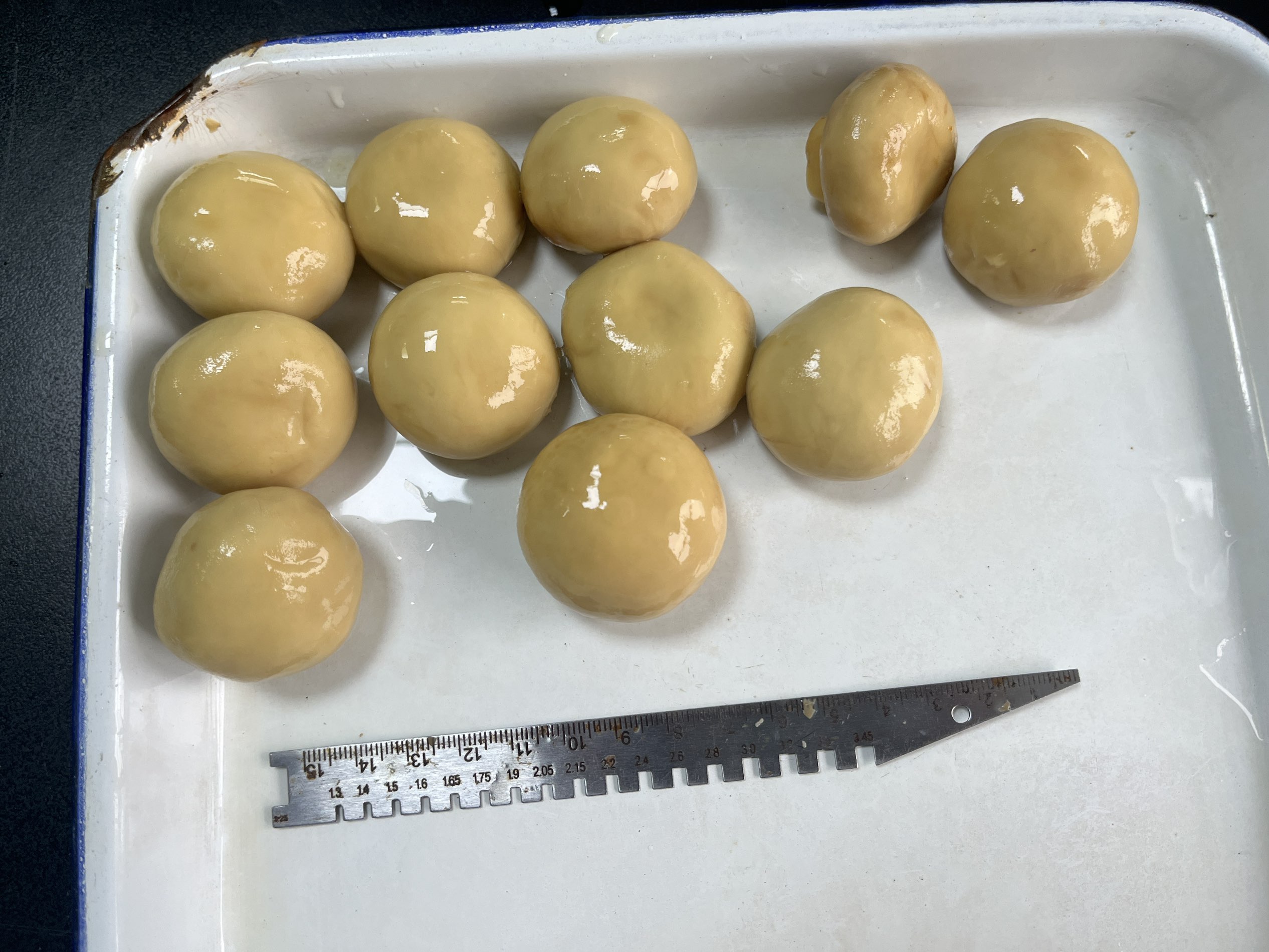
Canned whole mushrooms packed in export formats (425 g and 2950 g; A9 and A10 can sizes available across the range).
Comparing the Two Schemes Side by Side
The table below is a decision aid, not a ranking. Neither scheme is stronger; each answers a question the other cannot.
| Decision point | HALAL certificate 1031240000 | BRCGS Food Safety Issue 9 |
|---|---|---|
| Question answered | Are these mushroom products permissible for Muslim consumers and acceptable for Indonesia-bound sale? | Is the site's food safety management system for canned mushroom production audited and under control? |
| Scope unit | Product schedule — canned and glass mushroom products | Site and production scope — canned mushrooms |
| Reference framework | MS1500:2019; Indonesia Halal Law | BRCGS Food Safety Issue 9 |
| Primary buyer profile | Indonesia-focused importers, distributors and foodservice buyers; other Muslim-majority markets | Global retail, private-label brands, food processors, EU/UK and North American importers |
| What it evidences | Halal status of the listed mushroom products | System control of the canning process, traceability and corrective action |
| What it does not evidence | Seaming, sterilisation validation, hygiene zoning | Halal status of the product or its ingredients |
| Document to request from the supplier | Certificate with the product schedule attached | Certificate with the product and site scope pages attached |
| Typical failure if missing | Market access blocked; order refused at import or listing | Supplier approval blocked; QA rejection after commercial terms are agreed |
Step-by-Step: Choosing the Right Certification Path
Use this sequence on the mushroom order itself, not on the supplier's general capability. Each step produces a document you can file.
- Fix the market of sale first. Write the destination country on the enquiry before the SKU list. If the order ships to Indonesia, the halal question is settled first because it is an access condition. If it ships to EU, UK or North American retail and private label, the food safety system question is settled first because it drives supplier approval. Orders that go to both regions should be planned as two compliance files, not one.
- Match the SKU list to the certificate schedule, line by line. Take the mushroom products on the purchase order — whole, pieces and stems, and each net weight and can size — and check each one against the halal schedule. Anything not listed is out of scope until added. Do this before the price negotiation, because it can change the assortment.
- Separate can from glass in the scope check. The halal schedule in this comparison names canned and glass mushroom products; the BRCGS certificate names canned mushrooms. If the order includes glass jars, confirm both documents before the format is locked into the specification.
- Decide which certificate carries the customer approval. Ask your customer's quality team one direct question: what evidence do you need at supplier approval? If the answer is a third-party audited food safety system, BRCGS Issue 9 is the working document. If the answer is halal status for the listed products, the halal schedule is. Where both are required, hold both — they do not conflict, because they audit different things.
- Verify the per-shipment document set against the order. Confirm in writing that each batch ships with a COA, a health certificate, a pre-shipment inspection report and a traceability report, and that retained batch samples exist. If your programme requires independent verification, note that third-party inspection by SGS or Intertek is acceptable — agree at quotation stage rather than after production.
- Validate on a sample, then scale. Samples are provided at customer's courier cost, and comparing a retained production sample against the approval sample is the cheapest control you have against specification drift. Once specification, format, certification path and label design are confirmed, first shipment runs on a 1 FCL minimum with a 4–6 week lead time.
Use Cases: Which Buyer Leads With Which Certificate
Indonesia-focused importer or distributor
Lead with the halal schedule. The order cannot be placed on the market without product-level halal evidence, so the first check is whether each mushroom SKU — and each pack format — is named in the certificate. BRCGS follows as supporting evidence at the supplier-approval stage, particularly where the buyer's own retail customers run formal supplier programmes.
EU or UK retail and private-label buyer
Lead with BRCGS Issue 9. The supplier-approval process for private label is built around a third-party audited food safety system, and the buyer will also want traceability and corrective-action evidence behind the 36-month ambient shelf life claim. Halal evidence becomes relevant only where the retail assortment targets Muslim consumers; the halal schedule then becomes a listing condition for those specific SKUs.
Food processor or re-packing operation
Lead with BRCGS, then confirm product-specific declarations. Processors run their own audits and expect a certified system upstream. This channel pattern is documented in Agrogentra's supply history: since 2005, pear dices and seedless grapes in 4.25 kg A12 cans have been supplied to European and Greek fruit processors — including Del Monte, Kronos and Venus — for re-packing of canned fruit cocktails. The same documentation discipline applies to mushroom inputs: system certificate, batch COA, traceability.
Foodservice and catering supply
Both documents can be requested, depending on the end market. Ambient storage and long-distance sea transport conditions make canned mushrooms practical for catering and food processing channels, and buyers serving Muslim-majority markets will require the halal schedule while institutional clients will ask for the food safety certificate. Specifying both at tender stage avoids a substitution request later.
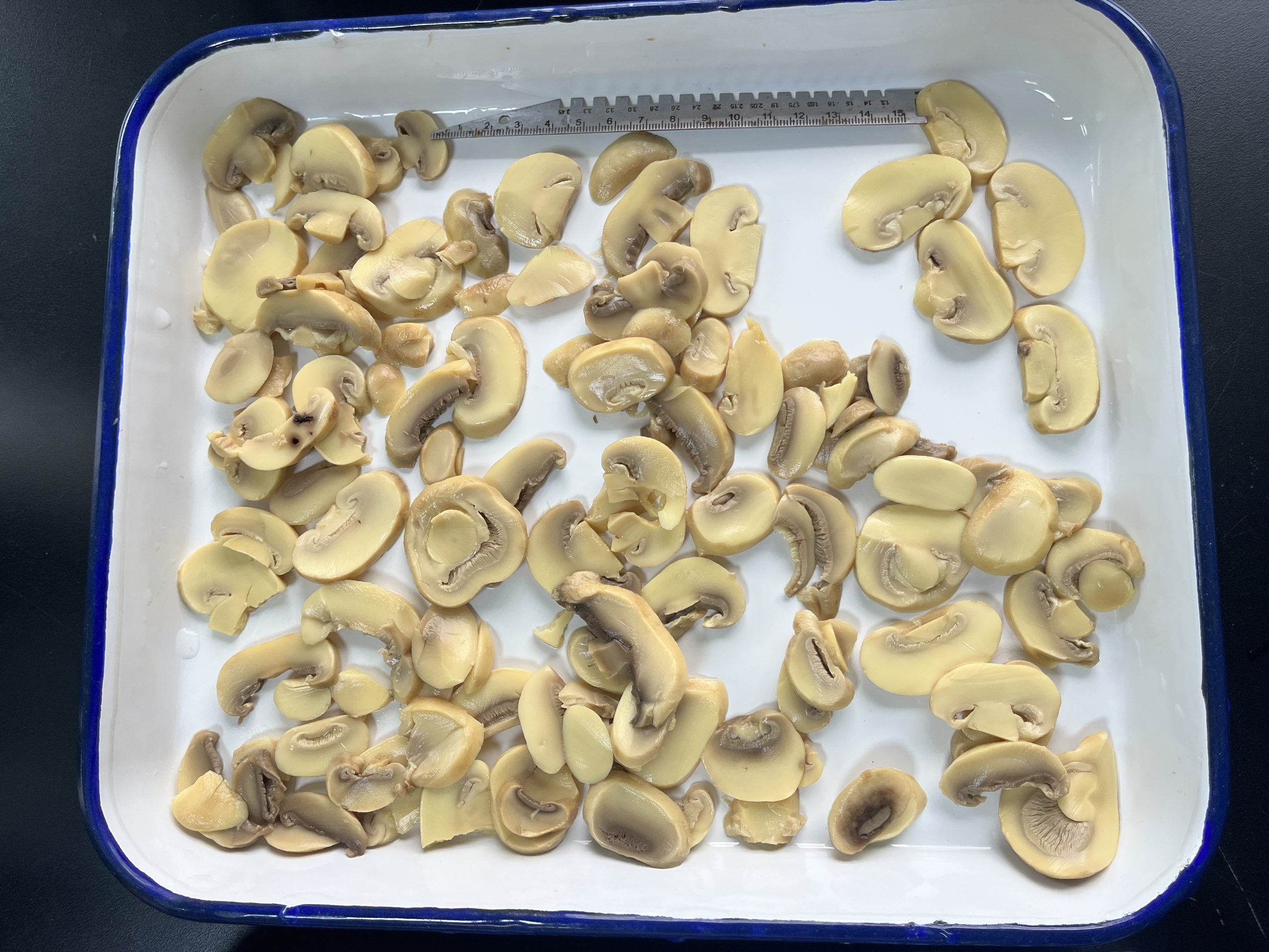
Canned mushrooms in pieces and stems, supplied for supermarket retail, convenience store distribution, catering and food processing.
Frequently Asked Questions
Is a HALAL certificate enough for canned mushrooms, or is BRCGS also needed?
It depends on who is buying. For an Indonesia-bound order, halal evidence assessed under MS1500:2019 is the access condition, and certificate 1031240000 covers canned and glass mushroom products. But a halal certificate does not evidence food safety system control — seaming, sterilisation validation, hygiene zoning or traceability. Retail, private-label and processor customers typically ask for a third-party audited food safety scheme during supplier approval, which is where BRCGS Issue 9 applies. Where both are required, hold both.
Does the halal scope cover glass jars as well as cans?
The schedule covers canned and glass mushroom products, so both pack formats sit inside that scope for the listed products. Products outside the schedule — a different mushroom preparation, or a mixed pack containing mushrooms — are not automatically covered until added. Check the schedule line by line against the SKU list on the purchase order, before the assortment is fixed.
Can one supplier hold both HALAL and BRCGS for the same mushroom line?
Yes. The two schemes are independent, so a supplier can hold a halal certificate for its listed products and BRCGS certification for its canned mushroom production at the same time. What matters for the buyer is that both documents name the same products and the same production site as the order. Request the certificate copies with their scope pages and check that the site matches the packing list. Agrogentra's quality structure — teams in Xiamen and Qingdao covering factory audit, raw-material testing, production monitoring, finished-product inspection and pre-shipment sampling — is the internal control layer that sits between those certificates and the shipment.
Does choosing between HALAL and BRCGS change MOQ or the cost structure?
Certification path does not set commercial terms; the order does. Canned mushroom orders run from a 1 FCL minimum with a 4–6 week lead time and a monthly capacity of 3,500 units. What changes with the certification path is document work: halal-market orders need the product schedule matched to SKUs before production, while retail or private-label orders need BRCGS scope confirmation plus batch COA, health certificate and traceability report. Third-party inspection by SGS or Intertek is acceptable if your programme requires it, and samples are supplied at customer's courier cost.
How fast can I get samples and a first shipment?
Samples are available at customer's courier cost, and each production batch is supported by a COA with retained samples, so an approval sample can be compared against production. Once specification, pack format (can or glass), net weight (425 g or 2950 g), certification path and label design are confirmed, lead time is 4–6 weeks to shipment on a 1 FCL minimum. To start, send your destination market and mushroom SKU list and request the certificate pack with a sample: email charles.cai@agrogentra.com, message WhatsApp +8618150918630, or download the catalogue below.
Conclusion: Choose by Question, Not by Prestige
The HALAL versus BRCGS decision for canned mushrooms is not a contest between two certificates. Certificate 1031240000, assessed under MS1500:2019 and covering canned and glass mushroom products, is the document that opens Indonesia and other Muslim-majority markets for those listed products. BRCGS certification under Issue 9, covering canned mushrooms, is the document that carries supplier approval with retail, private-label and processor customers. A buyer who needs both and holds only one is one documentary check away from a stalled container.
The working rule is simple: write the destination market on the enquiry, match the SKU list against each certificate's scope, keep the per-shipment document set — COA, health certificate, inspection report, traceability report — separate from both, and confirm everything on a sample before the first full container.
Request the certificate pack and a mushroom sample
Tell us your destination market and your mushroom SKU list — whole, pieces and stems, 425 g or 2950 g — and we will confirm which certificate scope applies to each line before you commit to a container. A 1 FCL minimum applies, with a 4–6 week lead time.
Email: charles.cai@agrogentra.com | miya.kang@agrogentra.com | Tel: +86-592-5393122 | WhatsApp: +8618150918630
Download the Agrogentra product catalogue (PDF) | www.agrogentra.com
Have Questions or Need More Details?
Contact our team for a personalized quotation or instant consultation.
Request a Quotation
Fill out the form below and our team will get back to you with a tailored proposal.
WhatsApp Direct Chat
Prefer to chat in real-time? Message us on WhatsApp for instant assistance & quick answers.
- Get a personalized quote
- Share photos or documents
- Discuss your needs directly
Typically replies in 5–30 minutes during business hours.