Canned Fish Selection Parameters: Species, Ambient Shelf Life and Certificate Scope
Answer first: A canned fish specification should be read as three linked checks, not one product name. First, confirm the species and pack identity—sardines, mackerel, tuna, Alaska pollock, squid or baby clam—together with the can size and drained weight. Second, state the ambient shelf life, which for the canned fish lines covered here should sit within 24–36 months and be tied to the exact best-before date and storage conditions. Third, match the certificate scope to the exact product: BRCGS certificate 051A1312001 covers manufacturing of canned mackerel, canned sardine and canned tuna, while Halal certificate 8998250000 lists specific canned sardine and canned mackerel presentations for Indonesia and Malaysia. A spec sheet that passes one check but fails the others is not a procurement-ready specification.
Agrogentra Canned Foods is the canned-food line of Agrogentra & Co., Ltd., a Xiamen-based trading company established in 2000 with QC operations in Xiamen and Qingdao and OEM production services. That context matters because a supplier's ability to verify a specification before shipment depends on the evidence behind the sheet: incoming raw-material inspection, on-line production patrol, laboratory testing for each batch, retention samples and pre-shipment inspection. This guide translates those evidence points into selection parameters importers can use at the evaluation and execution stages.
Why one product name is not a specification
Importers often receive a one-line description such as “canned sardines in oil” or “canned mackerel in tomato sauce” and treat it as a complete offer. In practice, the same common name can hide differences in species, presentation, can size, drained weight, sauce base, shelf-life declaration and certificate scope. The specification becomes useful when each of those elements is written in a way that can be checked against a certificate, a label, a COA and a pre-shipment inspection record.
The procurement risk is not only product quality. A certificate can be valid yet irrelevant if its scope does not name the product being bought. A shelf life can be long yet unsuitable if the label and storage instructions do not match the destination market. A private-label design can be approved yet still require the buyer to confirm whether the target market needs a Halal certificate that covers the exact species and sauce. Reading the sheet in three layers reduces that risk.
Industry background: ambient stability and the frozen alternative
Canned fish is preserved by sealing and commercial sterilization rather than by adding preservatives. The can is hermetically sealed, leaving a vacuum inside, and then heated under pressure so that pathogenic bacteria and spoilage organisms capable of growing at ambient temperature are destroyed. After cooling, an incubation check is used to confirm that no swelling or microbial growth occurs before release. This is why unopened canned fish can be distributed without a cold chain, provided the can, seam and sterilization parameters are correct.
The commercial comparison is frozen fish. Frozen storage at -18°C requires continuous cold-chain transport and cold storage, and it gives a different shelf-life and cost profile. Canned fish can be stored at ambient temperature and, for the lines discussed here, is specified with a shelf life of 24–36 months. Neither model is automatically better: a frozen program may suit a buyer with full cold-chain facilities and a market that prioritizes a fresh-like texture, while an ambient canned program can reduce cold-chain exposure and inventory loss in remote or temperature-limited distribution. The selection should follow the buyer's warehouse, route to market and target consumer, not a generic preference.
Market context supports the scale of the category but does not replace product-level verification. Fortune Business Insights estimated the global canned seafood market at USD 57.69 billion in 2025, while Grand View Research reported that canned fish accounted for 75.3% of the canned seafood market in the same year. UN Comtrade and FAO-derived data put global imports of canned and prepared fish under HS 1604 at 3.2 million tonnes worth USD 17.54 billion in 2023, with canned tuna at about 43% of import volume. These figures describe the category; they do not tell a buyer whether a specific can of sardines is covered by a specific certificate.
Parameter 1: Species and pack identity
The first selection parameter is species identity, stated in the same form that will appear on the commercial invoice, label and certificate request. The canned fish range includes canned sardines, canned mackerel, canned tuna, canned Alaska pollock, canned squid and canned baby clam. These are not interchangeable. A certificate that names canned mackerel, sardine and tuna does not automatically cover Alaska pollock, squid or baby clam. A buyer sourcing those species should ask for product-specific evidence rather than reading the nearest certificate as a general approval.
Pack identity should also be fixed at the specification stage. The product range lists models such as 125g, 170g (843#), 425g and 1000g for the canned fish range. The buyer should write the can size, drained weight, sauce or brine base, and labeling language into the purchase order. If the product is a private-label item, the label artwork and SKU code should be tied to the same specification so that the factory, QC team and pre-shipment inspector are checking one version, not several.
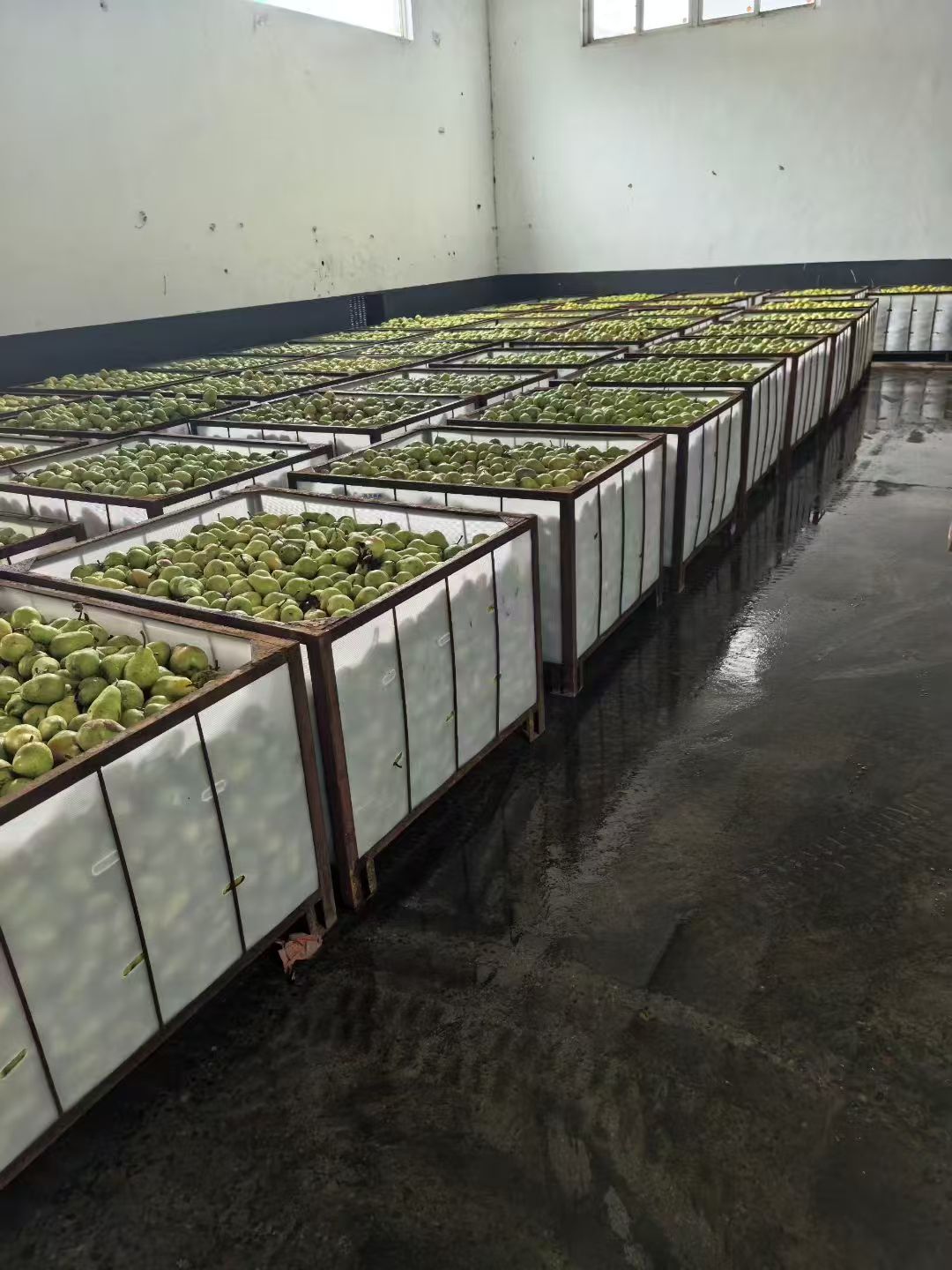
Raw-material storage and incoming inspection are part of the evidence behind species and pack identity; the specification should name the species and presentation that QC will verify.
Parameter 2: Ambient shelf life and storage conditions
The second parameter is ambient shelf life. For the canned fish lines discussed in this guide, the specification should state a shelf life within 24–36 months and should identify the exact best-before date on the can or label. “Up to 36 months” is a useful range for planning, but it is not a substitute for the product-specific date and the storage conditions that support it. The buyer should require the supplier to confirm the shelf-life basis for the exact species, sauce, can size and sterilization process, not only for the category.
Ambient shelf life also depends on how the product is stored after arrival. Practical storage guidance for canned fish is a cool, dry place at 5–25°C, relative humidity below 75%, pallets at least 10 cm off the floor, and first-in-first-out rotation. These conditions protect the can from rust and quality deterioration; they are not a licence to store canned fish in high heat or direct sunlight. A destination market with high humidity or high warehouse temperatures may need tighter storage instructions in the purchase contract.
Frozen storage at -18°C is a separate distribution model. It should not be written into a canned-fish specification as if it were an ambient storage instruction, and an ambient canned product should not be presented as a frozen equivalent. The buyer's choice between ambient canned fish and frozen fish should be based on cold-chain availability, shelf-life requirements, inventory turnover, and the target consumer's expectation of texture and preparation.
Parameter 3: Certificate scope matched to the exact product
The third parameter is certificate scope, and this is where many specification sheets are weakest. A certificate number and expiry date are not enough. The scope must name the product, the process and the market for which the certificate is being used. Two certificates illustrate the point.
BRCGS certificate 051A1312001 is issued under the BRCGS Global Standard for Food Safety, Issue 9 (August 2022), by Intertek Certification Ltd (UKAS Accredited Body No. 014). Its scope is “Manufacturing of Canned Mackerel, Sardine and Canned Tuna.” The certificate was issued on 2026-01-27 and expires on 2027-02-13. For a buyer sourcing canned mackerel, canned sardine or canned tuna, this certificate is directly relevant to the manufacturing scope. For canned Alaska pollock, squid or baby clam, it does not provide the same named coverage; the buyer should request the applicable product-specific certification or audit evidence.
Halal certificate 8998250000 is issued by SHC (Shandong Halal Certification Service Co., Ltd.) and is valid from 2025-07-01 to 2028-06-30. Its market scope covers Indonesia under Indonesia Halal Law Regulations, recognized by BPJPH, and Malaysia under MS1500:2019, recognized by JAKIM. The canned scope includes canned mackerel in tomato sauce, oil and brine, and canned sardines in tomato sauce, oil and brine. For canned sardines in oil and canned mackerel in tomato sauce, the certificate is directly relevant for Malaysia and Indonesia. It should not be stretched to canned tuna, Alaska pollock, squid or baby clam, because those products are not named in the canned scope.
| Product | BRCGS 051A1312001 scope | Halal 8998250000 canned scope | Specification focus |
|---|---|---|---|
| Canned mackerel | Named in manufacturing scope | Named: tomato sauce, oil, brine | Species, sauce base, drained weight, can size, shelf life |
| Canned sardine | Named in manufacturing scope | Named: tomato sauce, oil, brine | Species, oil or brine, can size, label market |
| Canned tuna | Named in manufacturing scope | Not listed in canned scope | Species, pack, private-label artwork, separate Halal check if required |
| Canned Alaska pollock | Not named in scope | Not listed in canned scope | Request product-specific certification and process evidence |
| Canned squid | Not named in scope | Not listed in canned scope | Request product-specific certification and process evidence |
| Canned baby clam | Not named in scope | Not listed in canned scope | Request product-specific certification and process evidence |
Table note: “Not named” or “not listed” means the certificate scope shown here does not name that product; it is not a statement that the product cannot be supplied or certified under another document. Buyers should request the exact certificate for the species and market.
Step-by-step: reading a spec sheet before the purchase order
Step 1 — Fix the species and market name. Write the product as it will appear on the label and certificate request: canned sardines in oil, canned mackerel in tomato sauce, canned tuna in water, canned Alaska pollock, canned squid or canned baby clam. Avoid a generic “canned fish” line in the purchase order.
Step 2 — Fix the pack. Add the can size (for example 125g, 170g/843#, 425g or 1000g), drained weight, sauce or brine, and labeling language. If the item is private label, attach the approved artwork and SKU to the same specification.
Step 3 — State the ambient shelf life. Require a shelf life within 24–36 months and the exact best-before format. Add the storage conditions the supplier expects after arrival, including the 5–25°C and below-75% relative-humidity guidance where relevant. Do not use a frozen -18°C instruction for an ambient canned product.
Step 4 — Match certificate scope to the product. Check that BRCGS 051A1312001 names the species and manufacturing process being bought. Check that Halal 8998250000 names the exact canned presentation and the destination market. If the product is tuna, pollock, squid or baby clam, do not assume the Halal scope extends to it; request the product-specific document.
Step 5 — Require batch-level QC evidence. Ask for the COA covering physical, chemical and microbiological tests for the batch, and confirm that incoming raw-material inspection, on-line production patrol and finished-product inspection are part of the supplier's full-process control. Batch sample retention and acceptance of third-party inspection by SGS or Intertek are additional verification points.
Step 6 — Align pre-shipment inspection with the specification. The acceptance inspection should check cargo quantity, packaging and appearance before shipment. Export documents should include the COA, health certificate, pre-shipment inspection report and traceability report. If the buyer needs a private-label release, the label and SKU should be checked against the approved artwork at the same stage.
What QC evidence should sit behind the specification
A specification is only as strong as the evidence used to verify it. Agrogentra's full-process control covers incoming raw-material inspection, on-line production patrol, and laboratory physical, chemical and microbiological testing for each batch with a COA report. Batch samples are retained, and third-party inspection by SGS or Intertek is acceptable. The export document set includes the COA, health certificate, pre-shipment inspection report and traceability report, which gives the importer a document trail from batch to shipment.
For private-label work, OEM production services and logo customization are available, with a stated lead time of 4–6 weeks and a minimum order quantity of one mixed FCL; LCL orders are available upon negotiation. These terms matter at the execution stage because a private-label specification has more variables than a standard SKU: artwork, label language, can size, sauce base, carton configuration and certificate scope all need to be locked before production. The supplier's QC and document set should be read as the verification layer that connects those variables to the shipped batch.
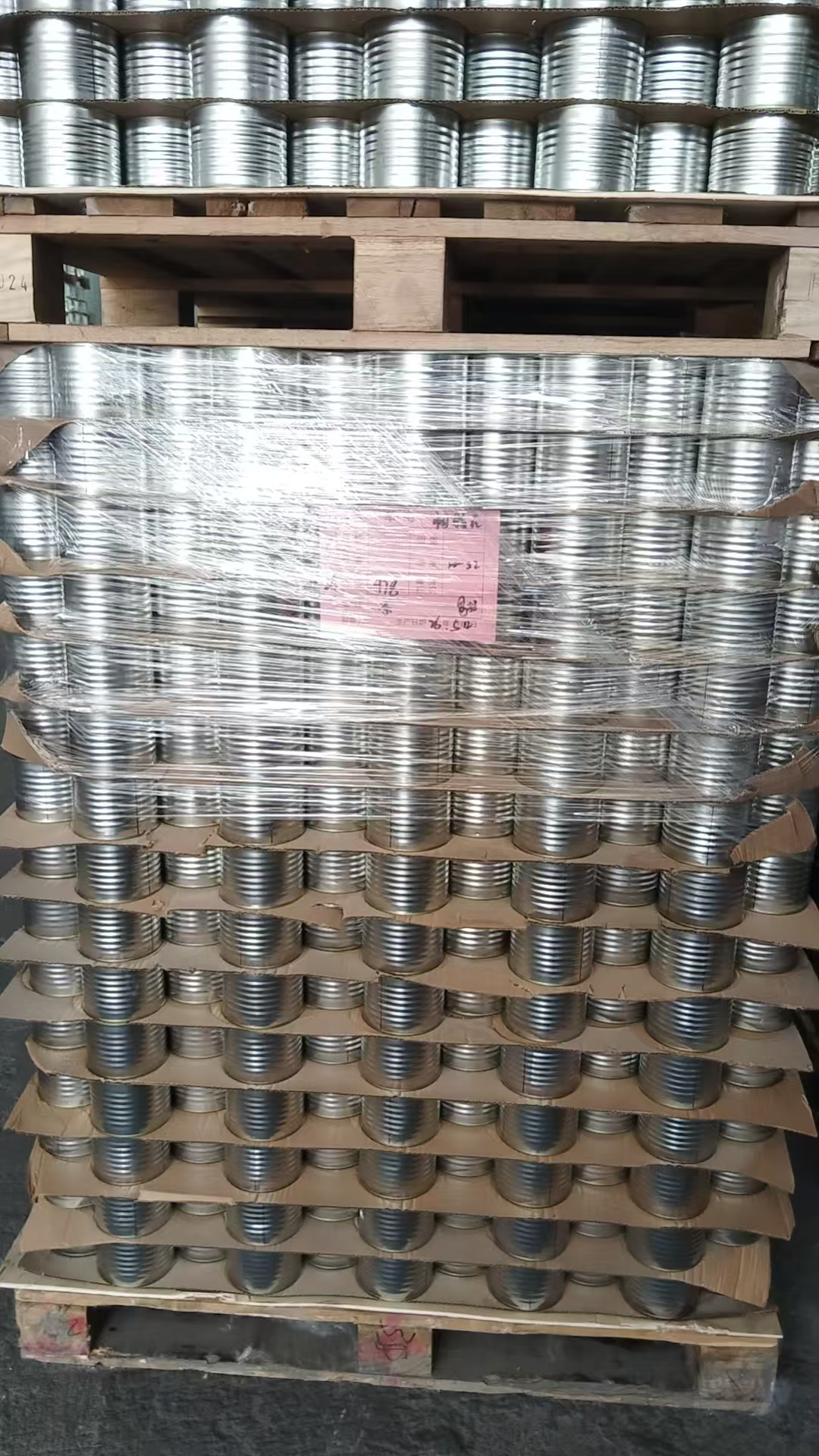
Palletized cartons support batch traceability and pre-shipment inspection; the specification should identify the SKU, batch and label version that QC is releasing.
Use cases: private-label tuna and mixed-load programs
Private-label canned tuna. Canned tuna is included in the product list, OEM production services and label customization are available, and the BRCGS certificate scope names canned tuna manufacturing. That combination makes tuna a workable private-label discussion from a manufacturing-scope perspective. The limitation is the Halal certificate: the Halal scope lists canned mackerel and canned sardine presentations, but not tuna. If the target market requires Halal certification for tuna, the buyer should request product-specific Halal evidence before confirming the order. This is exactly the kind of scope check that prevents a certificate from being attached to the wrong SKU.
Mixed-load import programs. A distributor may want sardines, mackerel and tuna in one program, or may add vegetables and fruit from the wider canned range. The commercial terms allow a mixed FCL, with LCL available upon negotiation. The specification should keep each SKU separate: one line for canned sardines in oil, one for canned mackerel in tomato sauce, one for canned tuna, each with its own species, pack, shelf life and certificate reference. A mixed load does not merge certificate scope; each product still needs its own match.
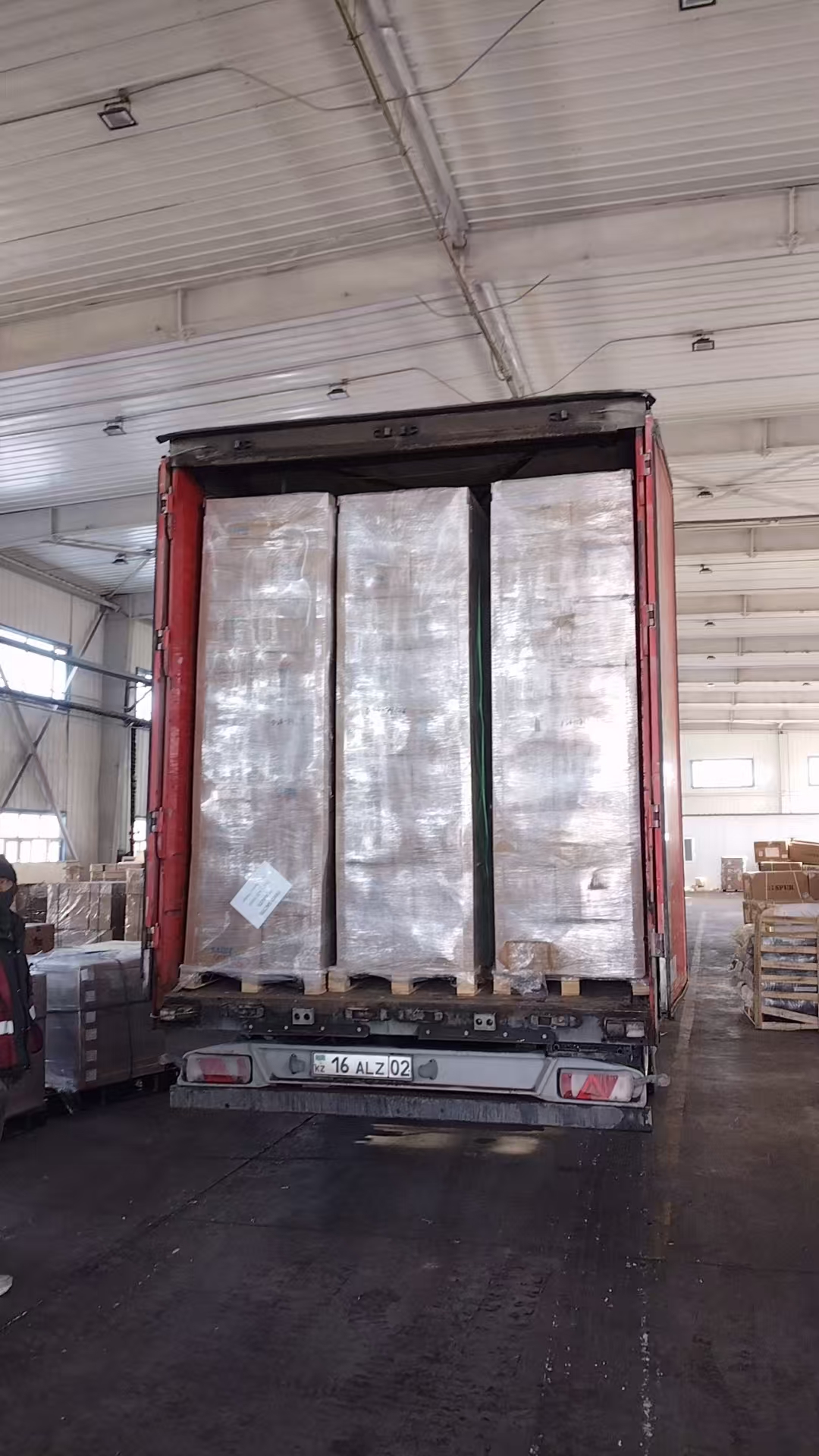
Container loading follows pre-shipment inspection and document review; the shipment should be traceable to the approved specification and certificate scope for each SKU.
Common misreads and boundary conditions
“BRCGS covers the factory, so it covers every product.” The BRCGS scope names canned mackerel, sardine and canned tuna. It should not be read as covering Alaska pollock, squid, baby clam or the vegetable and fruit lines. A factory-level certificate is valuable, but the scope still needs to match the product being purchased.
“The Halal certificate covers all canned fish.” The Halal scope lists specific canned mackerel and canned sardine presentations for Indonesia and Malaysia. It does not list tuna, pollock, squid or baby clam in the canned scope. Buyers with Halal-sensitive markets should request the exact product certificate rather than relying on the nearest Halal document.
“A 24–36 month shelf life means storage conditions do not matter.” Ambient shelf life assumes the can remains sealed and is stored within the specified conditions. High temperature, high humidity and rough handling can damage the can or accelerate deterioration. Receiving inspection should still check for swelling, leakage and severe rust; a swollen can indicates gas from microbial growth or seal failure and should be quarantined and traced by batch.
“Frozen at -18°C is the same as ambient canned storage.” It is not. Frozen storage is a different cold-chain model with different handling, cost and shelf-life assumptions. The buyer should choose the model that fits the market and warehouse, then write the matching storage instruction into the contract.
FAQ
Which certificate scope should a buyer check first for canned mackerel, sardine or tuna?
Start with BRCGS certificate 051A1312001, whose scope names manufacturing of canned mackerel, sardine and canned tuna, and then check the market-specific Halal certificate if the destination requires it. The BRCGS scope is relevant to those three species; it is not a blanket approval for every canned fish in the portfolio.
Does Halal certificate 8998250000 cover canned sardines in oil and canned mackerel in tomato sauce for Malaysia and Indonesia?
Yes, those two canned presentations are within the Halal scope for Malaysia and Indonesia, alongside other canned mackerel and sardine presentations in tomato sauce, oil and brine. The certificate is valid from 2025-07-01 to 2028-06-30. It should not be extended to tuna, pollock, squid or baby clam without a separate product-specific document.
What ambient shelf life should be written into the specification?
For the canned fish lines discussed here, write a shelf life within 24–36 months and require the exact best-before date on the can or label. Add the storage conditions the supplier expects after arrival, and do not substitute a frozen -18°C instruction for an ambient canned product.
Can Agrogentra support a private-label canned fish program?
OEM production services and logo customization are available, with a stated lead time of 4–6 weeks and a minimum order of one mixed FCL; LCL is available upon negotiation. For a private-label tuna project, the BRCGS scope names canned tuna, but the Halal scope does not; the buyer should confirm the target market's certification requirement before locking the label.
What documents support the specification before shipment?
The export document set includes a COA, health certificate, pre-shipment inspection report and traceability report. QC covers incoming raw-material inspection, on-line production patrol, and laboratory physical, chemical and microbiological testing for each batch, with batch samples retained. Acceptance inspection includes pre-shipment inspection of cargo quantity, packaging and appearance. To move a private-label or mixed-load program forward, the practical next step is to send the target species, pack, market and certificate requirement to the Agrogentra team and request a matching sample and quotation; the company brochure is available for download below.
Conclusion
A canned fish specification is procurement-ready only when species, ambient shelf life and certificate scope point to the same product. The species and pack identity tell the supplier what to make; the 24–36 month ambient shelf life and storage conditions tell the buyer how the product should be handled; and the certificate scope tells both parties whether the evidence is relevant to the exact SKU and market. BRCGS 051A1312001 supports canned mackerel, sardine and tuna manufacturing. Halal 8998250000 supports specific canned sardine and mackerel presentations for Malaysia and Indonesia. Tuna, pollock, squid and baby clam need to be checked against the exact certificate rather than assumed.
For importers moving from evaluation to execution, the next step is to convert the spec sheet into a line-by-line purchase order: species, can size, drained weight, sauce, shelf life, certificate reference and pre-shipment document list. Agrogentra's OEM production services, full-process QC and export document set provide the verification layer for that process. To discuss a private-label or mixed-load program, contact the team through Agrogentra & Co., Ltd. and download the Agrogentra company brochure for the product portfolio and contact details.
Have Questions or Need More Details?
Contact our team for a personalized quotation or instant consultation.
Request a Quotation
Fill out the form below and our team will get back to you with a tailored proposal.
WhatsApp Direct Chat
Prefer to chat in real-time? Message us on WhatsApp for instant assistance & quick answers.
- Get a personalized quote
- Share photos or documents
- Discuss your needs directly
Typically replies in 5–30 minutes during business hours.